
The Homeowner's Guide to Rinsing Outdoor AC Coils Safely
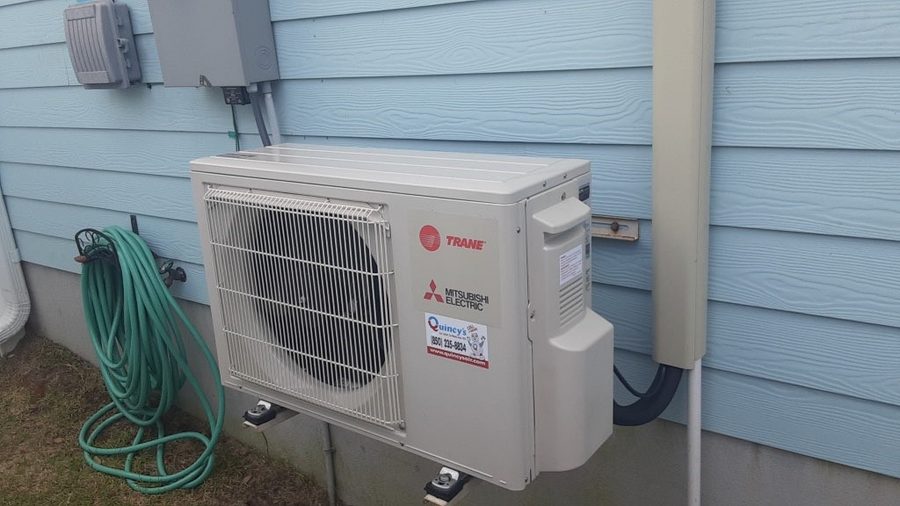
If you live within a mile of the Gulf, your outdoor AC unit is under attack from something inland homes never deal with: salt. Here is exactly how often to rinse it, and the one tool you should never use.
- Rinse coastal AC condenser coils every 1–2 months — salt air corrodes and coats the fins far faster than inland units.
- Use a standard garden hose (~40 PSI), spraying from the inside out, top to bottom.
- Never use a pressure washer (1,500–3,000 PSI) — it bends the fins flat and drives water into electrical components.
- Always shut off power at the disconnect first.
- For heavy salt buildup, finish with a no-rinse coil cleaner.
What is coastal coil rinsing? It is the routine flushing of salt, sand, and airborne debris off your outdoor condenser unit's aluminum fins. It is for homeowners within roughly one mile of saltwater, where wind-driven salt accelerates corrosion. It matters because salt buildup insulates the coil, forcing the system to run longer and harder — cutting efficiency, raising your power bill, and shaving years off the unit's life.
How often should you clean a coastal AC unit?
Distance from saltwater is what sets the schedule. The closer you are to the Gulf, the more aggressively salt aerosol settles on and corrodes the coil. Here is the rule we give our customers on the Emerald Coast:
| Distance from saltwater | Rinse frequency | Pro maintenance |
|---|---|---|
| Beachfront / under ¼ mile | Every month | 2× per year |
| ¼ to 1 mile inland | Every 6–8 weeks | 2× per year |
| 1 to 3 miles inland | Every 2–3 months | 2× per year |
| Inland (non-coastal) | 2–3× per year | 1–2× per year |
A monthly garden-hose rinse during cooling season (March through October here) is the single most valuable thing a beachside homeowner can do between professional visits. It does not replace a real tune-up — it protects the unit so the tune-up finds less damage.
Why a ten-minute rinse pays off: Salt doesn't just corrode the coil — it forms an insulating layer that traps the heat the coil is trying to release. The compressor then runs longer for the same cooling, using more electricity and wearing out sooner. A regular rinse is the cheapest way to protect the single most expensive part of the system.
Why salt air destroys coils faster than inland
Unlike an inland unit, a coastal condenser pulls in air carrying a fine mist of salt every minute it runs. This means three things happen at once:
- Insulation. Salt and grime coat the aluminum fins and act like a blanket, trapping the heat the coil is trying to release.
- Corrosion. Salt is hygroscopic — it pulls moisture out of the air and holds it against the metal, which accelerates rust on the fins and the copper-to-aluminum joints.
- Airflow loss. Caked salt narrows the gaps between fins, so the fan moves less air across the coil and the compressor works harder for the same cooling.
For the full breakdown of how this shortens equipment life, see why your AC dies faster near the beach.
Garden hose vs. pressure washer: the safe PSI
This is where most well-meaning homeowners destroy their own unit. The aluminum fins on a condenser coil are thinner than a soda can. They bend under almost no force. A pressure washer does not clean them — it folds them flat, which blocks airflow worse than the salt did.
| Tool | Garden hose ✓ | Pressure washer ✗ |
|---|---|---|
| Typical pressure | ~40 PSI | 1,500–3,000 PSI |
| Effect on fins | ✓ Rinses safely | ✗ Bends them flat |
| Risk to electrical | ✓ Low | ✗ Forces water into components |
| Voids warranty? | ✓ No | ✗ Damage often not covered |
If a plain hose stream is not strong enough to lift the grime, the answer is a no-rinse foaming coil cleaner — not more pressure.
Technician insight
On beachfront homes the right routine is a monthly garden-hose rinse — but the coil damage our technicians repair most often on the coast isn't from salt at all. It's from a homeowner reaching for a pressure washer and flattening every fin, which chokes airflow worse than the salt ever would. A gentle hose and a no-rinse coil cleaner do the job without ever risking the fins.
Jeff Vaughan — Service Technician · 12 years with Quincy's
EPA 608 Universal Certified · RGF Air Quality Specialist · Certified Comfort Advisor
The 5-step safe rinsing method
- Cut the power. Turn the system off at the thermostat, then flip the outdoor disconnect box (the gray switch on the wall next to the unit) to OFF. Never spray a live unit.
- Clear loose debris by hand. Pull leaves, grass clippings, and twigs out of the top grille and away from the base. Don't push debris into the fins.
- Rinse inside-out, top to bottom. With a normal garden hose (~40 PSI), spray through the coil from the inside if the top lifts off, or at a slight downward angle from outside, pushing salt out the way it came in.
- Treat heavy salt. For thick buildup, spray on a no-rinse foaming coil cleaner, let it dwell per the label, then rinse gently with the hose.
- Dry and restore power. Let the unit air-dry, switch the disconnect back on, and run a cooling cycle to confirm it's working normally.
Want the deep clean a hose can't do?
Our maintenance plan covers indoor coil cleaning, drain treatment, refrigerant and electrical checks — twice a year, with priority summer scheduling.
See the maintenance plan →Should you rinse the coils yourself or call a pro?
Both. They do different jobs:
- You (monthly): the garden-hose rinse above. Cheap, safe, and the highest-value thing you can do between visits on the coast.
- A technician (twice a year): everything a hose can't reach — cleaning the indoor coil, clearing and treating the condensate drain, checking refrigerant charge, and testing the capacitor and electrical connections that salt corrodes.
5 signs your beachside coils need cleaning now
- The outdoor unit's fins look white, chalky, or crusted.
- The AC runs longer and longer to hit the set temperature.
- Your power bill climbed without a change in the weather.
- The air from your vents isn't as cold as it used to be.
- You can see rust streaks or pitting on the fins or cabinet.
How much a clean coil lowers your bill
A salt-coated coil can't dump heat efficiently, so the system runs longer for the same comfort — and a system that runs longer uses more electricity and wears out sooner. Keeping the coil clean restores heat transfer, which is the cheapest efficiency upgrade available to a coastal homeowner: the cost of water and ten minutes a month. The U.S. Department of Energy confirms a dirty condenser coil reduces system efficiency and recommends keeping the area clear of debris.
Frequently asked questions
How often should I clean a coastal AC unit?
Rinse the outdoor condenser coils every 1 to 2 months on a beachside home. Salt air corrodes and coats the fins far faster than inland, so monthly is best within a quarter mile of saltwater and every two months up to about a mile inland.
Can I use a pressure washer on my AC coils?
No. A pressure washer runs 1,500 to 3,000 PSI, which bends the soft aluminum fins flat and can force water into the electrical components. Use a standard garden hose at roughly 40 PSI instead.
Do I need to turn off the AC before rinsing the coils?
Yes. Always shut the system off at the thermostat and switch off the outdoor disconnect box before spraying water near the unit. Water plus live electrical components is dangerous.
Should I rinse the coils myself or hire a pro?
A monthly garden-hose rinse is safe for most homeowners. Hire an HVAC technician twice a year for the deep work a hose can't do: cleaning the indoor coil, treating the drain line, checking refrigerant, and testing electrical components.
Does rinsing salt off the coils lower my power bill?
Yes. A salt-coated coil traps heat and forces the system to run longer to cool the same space. Keeping the coil clean restores heat transfer, which lowers run time, energy use, and wear on the compressor.