
Is Your Lynn Haven Heat Pump Still Under Warranty?
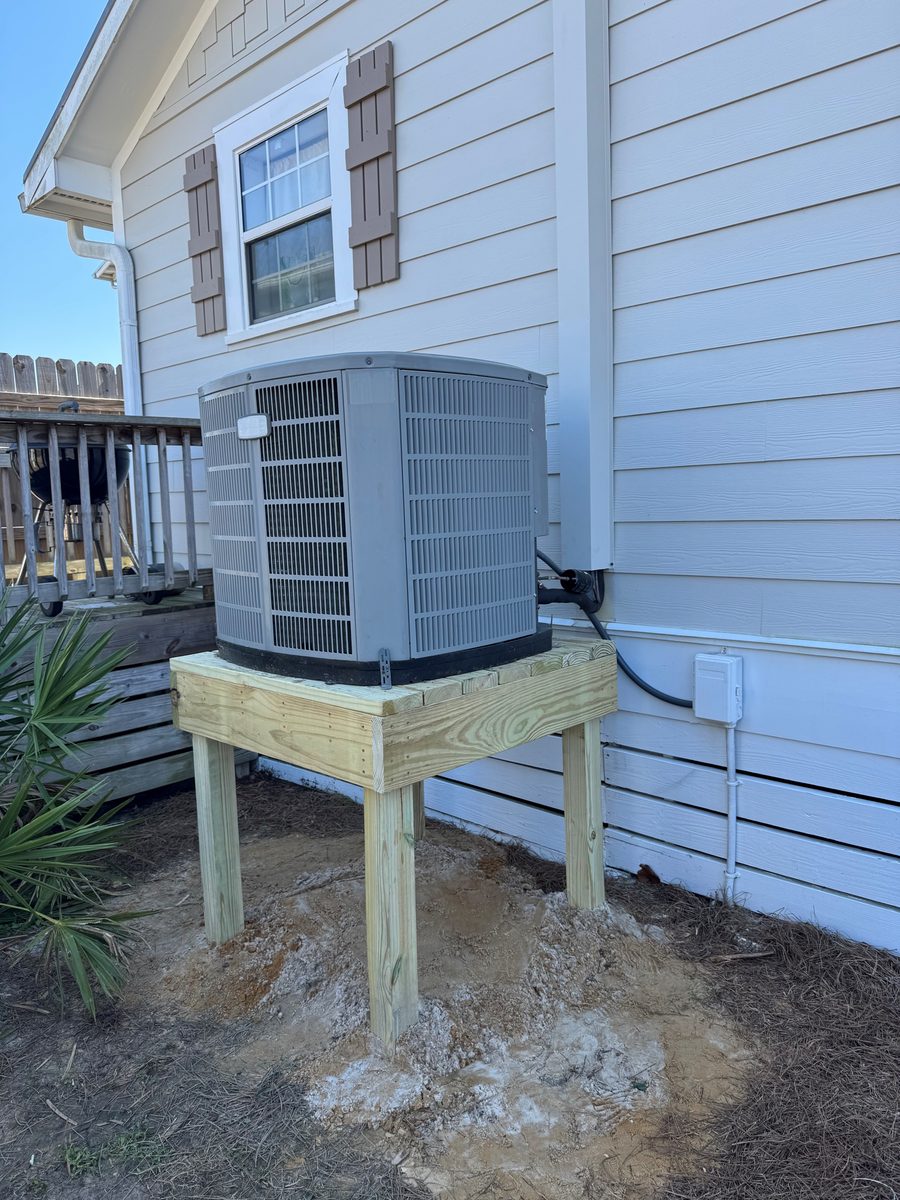
If your Lynn Haven system was installed in the 2018 to 2020 rebuild after Hurricane Michael, it is now about 6 to 8 years old. Whether a failed part is still covered depends mainly on whether the equipment was registered with the manufacturer, and even a covered part usually still means a labor bill.
Here is the arithmetic. Most major brands give 10 years of parts coverage when the equipment is registered within 60 to 90 days of installation, and often only 5 years if it never was. A 2018 to 2020 install that was never registered has very likely run past a five-year term already. One that was registered on time may have parts coverage left until 2029 or 2030. Terms vary by brand, so check your paperwork before you rely on either number.
- Registration is the dividing line: often 10 years of parts coverage if registered within 60 to 90 days, often 5 if not.
- Parts, not labor. The manufacturer pays for the part. Labor is whatever the installer wrote down, and refrigerant is usually billed separately.
- Ten minutes answers it: two data plates, the manufacturer’s lookup, and your paperwork.
- Coverage matters most on the big heating parts: the compressor, the reversing valve and the defrost board.
Why so many Lynn Haven heat pumps are the same age
Hurricane Michael came ashore in October 2018, and a large share of Lynn Haven’s heating and cooling equipment was replaced between 2018 and 2020. Whole subdivisions along the North Bay were re-equipped within months of each other, and those systems have lived through the same summers and the same cold snaps ever since.
Same-age equipment working under the same conditions tends to reach the same wear points around the same years. At 6 to 8 years a heat pump is well short of the 12 to 17 years a system typically lasts inland, but it is past the stretch where nothing goes wrong. It is also exactly the age where the registration question decides who pays for the part.
How to check your heat pump warranty in ten minutes
- Photograph both data plates. The outdoor unit has a metal or foil label, usually on a side panel, with the model number and serial number. The indoor air handler, in a closet, garage or attic, has its own. Take clear photos of both, since the two pieces of equipment can have separate coverage.
- Run the manufacturer’s lookup. Most major brands have a warranty lookup on their website. Enter the serial number and it will show whether the equipment was registered and what coverage applies.
- Find the installer’s paperwork. The invoice, any registration confirmation, and the contractor’s written labor terms. If those are lost, the permit record for the replacement, kept by the local building department, shows the install date and who did the work.
- Check your purchase documents if you bought after the install. HVAC paperwork often travels with the closing file or the seller’s disclosures. A home warranty plan bought at closing is a separate service contract, not the manufacturer’s warranty.
Ten minutes of that is worth doing now, on a mild day, rather than with a technician standing in your hallway waiting for an answer.
What a heat pump warranty pays for, and what it does not
- Parts. The manufacturer covers a failed covered part for the length of the parts term, which is where registration counts.
- Labor. Not covered by the manufacturer. Labor is covered by the installing contractor for whatever period that contractor wrote down, often much shorter than the parts term and sometimes extended by a paid plan. On a 2018 to 2020 install, expect to pay labor unless your paperwork says otherwise.
- Refrigerant. Usually billed separately, even when the part that failed is covered.
- Conditions. Coverage can depend on the original owner and on documented maintenance. Keep every maintenance report in the same folder as the install paperwork.
| Part | Typical range, parts and labor | If the part is covered |
|---|---|---|
| Defrost control board or sensor | $300 to $750 | Part covered; labor still billed |
| Reversing valve | $500 to $1,400 | Valve covered; labor and refrigerant recovery and recharge still billed |
| Compressor | $1,500 to $3,500 | Compressor covered; labor and refrigerant still billed |
| Evaporator coil | $1,200 to $2,800 | Coil covered; labor and refrigerant still billed |
| Blower motor | $450 to $1,100 | Motor covered; labor still billed |
| Capacitor | $150 to $400 | A small part, so coverage changes the bill less |
Typical Bay County market ranges, not a Quincy’s quote. Warranty terms vary by brand; check your paperwork.
Want the price before anyone comes out?
Tell us what the system is doing. We quote the trip charge on the call and the repair in writing on site.
The heating-season parts where coverage matters most
Three parts carry most of the money in a winter heat pump repair, and all three do their hardest work in heating mode:
- The defrost control board and sensor decide when the outdoor coil needs clearing of frost. When they fail, the coil ices over and heating fades. Our explainer on heat pump defrost mode shows what normal looks like.
- The reversing valve switches the refrigerant flow between cooling and heating. A valve that sticks leaves you with cool air on HEAT, and replacing it means recovering and recharging the refrigerant.
- The compressor is the most expensive part in the system. On a registered post-Michael system a compressor failure is the single biggest reason to look up coverage before approving anything.
When a covered part is still not worth installing
A free part is not a free repair. On a reversing valve or compressor job, labor and refrigerant are a large part of the bill, and they stay with you. For most 6 to 8 year old Lynn Haven systems that is still a good trade, because the rest of the equipment has years left in it.
The math changes on an older system, one that predates the storm, or one that has needed several major repairs in a short span. A new system in Bay County typically runs $6,500 to $17,000 installed, and most 1,500 to 2,000 square foot homes land between $8,000 and $13,500. When the uncovered labor and refrigerant on one repair start to look like a meaningful slice of that, get a replacement number before approving the repair. Our guide on when to replace your AC walks through the decision, and AC installation in Lynn Haven covers what replacement involves.
Heat pump acting up in Lynn Haven?
You get the diagnosis and the failed part in writing, so you can check coverage before you approve the repair. Same day in most cases.
📞 Call (850) 235-8834What to have ready when you call about a Lynn Haven heat pump
- Photos of both data plates, with the model and serial numbers readable.
- The install date and the installing contractor’s name, if you know them.
- The result of the manufacturer’s lookup or any registration confirmation.
- Your maintenance records.
- A plain description of what the system is doing: no heat, cool air on HEAT, ice on the outdoor unit, a breaker tripping.
Quincy’s gives you the diagnosis and the failed part in writing, so you can check coverage with the manufacturer or your installer. The trip charge is flat and quoted on the phone, and the repair is priced in writing before work starts. Lynn Haven is a daily route for us. Heating calls go through heating repair in Lynn Haven, summer breakdowns through AC repair in Lynn Haven, and everything else we do in town is on our Lynn Haven page.
Heat pump warranty questions from Lynn Haven homeowners
How long is the warranty on a heat pump?
Most major brands give 10 years of parts coverage when the equipment is registered with the manufacturer within 60 to 90 days of installation, and often only 5 years if it was never registered. Terms vary by brand, so check your paperwork.
Is my Lynn Haven heat pump from after Hurricane Michael still under warranty?
It depends mainly on registration. A system installed between 2018 and 2020 and registered on time may still have parts coverage. One that was never registered has likely passed a five-year term already. The manufacturer’s lookup, using the serial number, gives the answer.
Does the manufacturer warranty pay for labor?
No. Manufacturer warranties cover parts. Labor is covered only by the installing contractor, for whatever period that contractor wrote down, which is often much shorter than the parts term. A covered part on a six-year-old system usually still means a labor bill.
Is refrigerant covered under a heat pump warranty?
Usually not. Refrigerant is normally billed separately, even when the part that failed is covered. On a reversing valve or compressor replacement, the refrigerant has to be recovered and recharged, and that cost stays with the homeowner.
How do I look up my heat pump warranty?
Photograph the data plates on the outdoor unit and the indoor air handler to get the model and serial numbers, then enter them in the manufacturer’s online warranty lookup. Compare the result with the installer’s invoice and registration paperwork.
Does the warranty still apply if I bought the house after the system was installed?
Sometimes. Some warranties depend on the original owner, and some depend on documented maintenance. The brand’s warranty terms decide it, so look the equipment up by serial number and read the terms that come with the result.