
Furnace vs Heat Pump for Panama City and Panama City Beach Homes
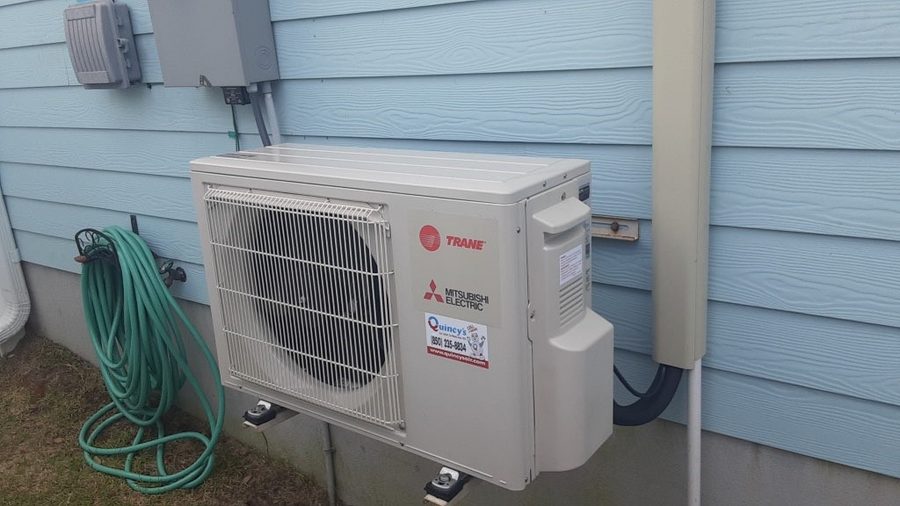
Most Bay County homes heat with an electric heat pump backed by electric heat strips, because our winters are short and mild and the same outdoor unit also does all the cooling. A gas furnace, usually paired with a central air conditioner, makes sense mainly where the house already has gas service and a sound flue. Dual fuel combines the two: a heat pump for most of the winter and a gas furnace for the coldest hours.
Below: how to tell which you have, running and replacement costs, comfort, and safety. Prices are typical Bay County market ranges, not a Quincy’s quote.
- Heat pump plus strips is the Bay County standard. Gas furnaces are a minority.
- A working heat pump heats for a third to a half of what strips cost at roughly 14 cents per kWh on FPL.
- The heat pump premium is usually a few hundred dollars to about $2,500 over cooling-only equipment of the same size.
- Any home with a gas appliance needs a working carbon monoxide detector.
- Salt air hits the outdoor unit either way. A furnace house still has an AC condenser outside.
- Why the indoor unit gets called a furnace when it is not
- How to tell which one you have in two minutes
- What each one costs to run on FPL power
- How the heat feels: hot bursts versus steady warmth
- Heat pump, gas furnace and dual fuel side by side
- What replacement costs in 2026
- Maintenance and safety: what changes when there is a flame
- Panama City Beach: salt air and all-electric condos
- Inland Panama City: older homes and original gas furnaces
Why the indoor unit gets called a furnace when it is not
Most homeowners call the unit in the hall closet or attic the furnace. In Bay County it usually is not. That tall metal cabinet is typically an air handler: a blower, the indoor coil and a bank of electric heat strips. Paired with an outdoor heat pump it heats and cools the house, and the strips add heat on the coldest mornings and during defrost.
The name is harmless until something breaks. A gas furnace and an air handler fail differently and need different parts, so telling us which you have saves time.
How to tell which one you have in two minutes
Grab a flashlight and look at the indoor unit.
- Gas furnace: a gas pipe with a shutoff valve running into the cabinet, and a metal flue pipe leaving the top or side and running up through the roof or out a wall. There is usually a gas meter outside, and the label says gas-fired.
- Heat pump with an air handler: no gas pipe and no flue, just copper refrigerant lines and wiring. The label lists a heat strip kit in kilowatts (kW), and the outdoor unit’s data plate says heat pump.
- Strips with a straight AC: the same air handler, but the outdoor unit only cools, so all winter heat comes from the strips, the most expensive way to heat.
Still unsure? Our heater not working checklist walks through the basic checks for each type.
What each one costs to run on FPL power
Bay County is served by FPL Northwest Florida, which absorbed Gulf Power in 2021. FPL’s published 2026 residential rates put a typical 1,000 kWh Panhandle bill at about $141, roughly 14 cents per kilowatt-hour.
Heat strips turn electricity straight into heat. A 10 kW strip kit, for example, running a full hour uses 10 kWh, about $1.40. A working heat pump moves heat in from outdoors instead of making it, and heats for a third to a half of what strips cost, so the same hour of heat lands somewhere around 47 to 70 cents. Put the other way, strips cost two to three times as much to run.
We do not quote gas prices; they vary by provider and season. Take the per-therm price from your own gas bill and have both options priced for your house. In an all-electric home the real contest is heat pump versus strips, and the heat pump wins it.
With short, mild winters, cooling dominates most Bay County bills, so cooling efficiency matters more than heating efficiency. Our SEER2 guide for Florida covers that side.
How the heat feels: hot bursts versus steady warmth
A gas furnace delivers much hotter air in short, strong bursts, and people who grew up with gas heat often prefer that feel at the vent.
A heat pump delivers air typically around 90 to 100°F, warmer than the room but cooler than skin, so it feels lukewarm on a hand. It makes up for that with longer, steadier cycles and more even temperatures, especially in two-stage and variable-speed models. Once the house is warm, both are comfortable. If yours feels too cool, our lukewarm air guide shows how to check it.
Heat pump, gas furnace and dual fuel side by side
| What to compare | Heat pump with strips | Gas furnace with AC | Dual fuel |
|---|---|---|---|
| Heats with | Heat pump, strips as backup | Gas burners | Heat pump in mild weather, furnace when colder |
| Cools with | The same heat pump | A separate AC condenser | The heat pump |
| Needs gas service and a flue | No | Yes | Yes |
| Air at the register | Around 90 to 100°F, long cycles | Much hotter, shorter cycles | Steady from the heat pump, hotter on furnace |
| Heating running cost | A third to a half of strip cost | Depends on your gas rate | Uses whichever source the controls favor |
| Combustion safety items | None from the heat pump | Heat exchanger, flue, CO detector | Heat exchanger, flue, CO detector |
| Typical Bay County fit | Most homes, and the usual setup in Beach condos | Older inland homes that already have gas | Gas homes whose owners want hot air on cold mornings |
Weighing a heat pump against gas?
Tell us what is in the house now. We will price the options that make sense, in writing.
What replacement costs in 2026
A new central system installed in Bay County typically runs $6,500 to $17,000, and most 1,500 to 2,000 square foot homes land between $8,000 and $13,500. Size drives most of the spread: about $7,000 to $10,500 for 2 tons, $8,000 to $12,500 for 3 tons and $10,500 to $17,000 for 5 tons.
A heat pump usually costs a few hundred dollars to about $2,500 more than cooling-only equipment of the same size. On an all-electric house that premium buys heat at a third to a half of strip cost every winter the system runs. We do not publish furnace replacement figures; the gas line, flue and AC move that number too much. If you have gas, ask for both options side by side.
Efficiency adds cost: 15.2 to 16 SEER2 adds $500 to $1,200 over the 14.3 SEER2 baseline, two-stage adds $1,500 to $3,000 and variable-speed $3,500 to $7,000. The federal 25C credit ended for equipment placed in service after December 31, 2025, so do not budget around it. Financing through Synchrony is available for qualified customers, subject to credit approval. Our 2026 HVAC pricing guide has the full ranges.
Maintenance and safety: what changes when there is a flame
A heat pump has no combustion. Its fall checkup covers the outdoor coil, refrigerant charge, reversing valve, defrost controls, and the strips with their limit switches and fusible links. A brief dusty smell the first time the strips run each winter is normal; a smell that lingers is not.
A gas furnace adds combustion: burners, ignitor, flame sensor, heat exchanger and flue. A cracked heat exchanger or blocked flue can push carbon monoxide into the living space, so every home with a gas appliance, including a water heater or range, needs a working carbon monoxide detector. Typical market ranges for common furnace parts are $150 to $250 for an ignitor and $80 to $250 for a flame sensor.
Either way, schedule a fall visit. Quincy’s maintenance plan is $292 a year for a single-system home: two visits and 10 percent off repairs.
Old furnace or heat pump near the end?
We give you the heat pump number and, where gas makes sense, the furnace number side by side, in writing, before you decide.
📞 Call (850) 235-8834Panama City Beach: salt air and all-electric condos
Near the Gulf, salt settles on the outdoor coil and corrodes fins, tubing and electrical connections. That happens to a heat pump and an AC condenser alike, so choosing gas heat does not spare a Beach home from coastal wear. System life near the Gulf runs shorter than the 12 to 17 years typical inland, whichever system you choose.
Gas furnaces are rare in Beach condos. Most are all-electric, with an air handler and strips indoors and a heat pump outside, so the real question there is which heat pump and what efficiency, not which fuel. Rinsing the outdoor coil with fresh water slows the salt. See heating repair in Panama City Beach for service.
Inland Panama City: older homes and original gas furnaces
In Panama City’s older neighborhoods, St. Andrews, the Cove and Forest Park among them, we still come across houses with gas service, and some still run an original gas furnace paired with a central AC. When that furnace reaches the end, there are three real options:
- Like for like: a new gas furnace and a new AC. Sensible when the gas line is in good shape, the flue is sound, and you want hot-air heat.
- Convert to a heat pump: an air handler with strips indoors and a heat pump outside. Combustion leaves the house and one outdoor unit handles both seasons.
- Dual fuel: a heat pump outside and a gas furnace inside. The heat pump carries most of the winter and the furnace takes over below a set outdoor temperature.
A rusted flue, venting that needs updating or a gas line that needs work makes the furnace route more expensive quickly, and that often settles it. See heat pump and furnace replacement in Panama City, or heating repair in Panama City to keep an older system going.
Furnace and heat pump questions from Bay County homeowners
Do most Panama City homes have a furnace or a heat pump?
Most have a heat pump with electric backup strips. The indoor cabinet people call the furnace is usually an air handler. Gas furnaces exist in Bay County, mostly in older inland homes with gas service, but they are a minority.
Is a heat pump cheaper to run than a gas furnace?
It depends on your gas rate, which we do not quote. What we can say is that a working heat pump heats for a third to a half of what electric strips cost at roughly 14 cents per kWh. To compare with gas, take the per-therm price from your own bill and have both options priced for your house.
What is a dual fuel system?
A heat pump paired with a gas furnace instead of electric strips. The heat pump does all the cooling and most of the heating; below an outdoor temperature set at installation, the furnace takes over. It needs gas service and a sound flue, and it usually costs more up front than a furnace with an AC.
Do I need a carbon monoxide detector with a heat pump?
A heat pump with electric strips burns nothing and produces no carbon monoxide. If the house has any gas appliance, such as a furnace, water heater, range or fireplace, install a working carbon monoxide detector. With a gas furnace it is not optional.
How much more does a heat pump cost than a straight AC?
Usually a few hundred dollars to about $2,500 more than cooling-only equipment of the same size, as a typical Bay County market range rather than a Quincy’s quote. A complete new system for most 1,500 to 2,000 square foot homes runs $8,000 to $13,500 installed.
Can I replace a gas furnace with a heat pump?
Yes. The furnace is replaced with an air handler and electric strips, the outdoor AC is replaced with a heat pump, the gas line to the furnace is capped and the old flue is dealt with. The existing ductwork usually stays, after a check that it is sized and sealed properly.