House not getting warm? Most Bay County homes heat with a heat pump, not a furnace — so the faults, the parts and the repair costs are completely different from what people expect. We find what actually failed, then tell you what it costs before we touch anything.
ResponseSame-day in most cases · after-hours for no heat
PricingFlat trip charge, repair price in writing
CoveragePanama City — 32401 & 32405
Start here
What is your heater doing?
Pick the closest match. Each one points at a different fault, and knowing which you have changes what we bring on the truck.
Call now
No heat at all
Nothing but room-temperature air, or the system will not start. With a freeze forecast, or anyone in the house who is elderly, very young or medically vulnerable to cold, this is a genuine after-hours call.
Heat pump air is genuinely cooler than furnace air. But if the house never actually warms up, the reversing valve usually has not shifted into heating — or the charge is low.
Light frost that clears is normal. A unit encased in ice that stays that way is a failed defrost board or sensor. Do not chip at it — switch to emergency heat and call.
AUX means the heat strips are helping. EM means they are doing all of it and the heat pump is locked out. Either one running constantly is two to three times the running cost.
The house stays warm, so the bill is the first symptom. Nine times out of ten the heat pump has quietly failed and the electric strips have been covering for it.
Sometimes the equipment is fine and the heat is escaping through uninsulated attic ductwork faster than the system can make it. Worth diagnosing before you spend on equipment.
Three winters’ worth of Panama City heating calls, in one page
Almost every heating call we take in Bay County is one of these three. Here is what is actually happening inside the system, and what we do about it.
The most common call
The heat pump stopped moving heat — and the strips quietly took over
A heat pump is an air conditioner that can run backwards. When the part that flips it does not flip, the system keeps running and the thermostat keeps calling, but the house never really warms up. The electric backup strips cover for it, so nothing looks broken until the bill arrives.
Reversing valve, solenoid coil and the board that energises it
Defrost board and defrost sensor — the parts that fail after ten idle months
Refrigerant charge, which fails visibly in winter and passably in summer
Aux lockout configuration, so the strips stop running above the temperature they are needed at
Ice on the outdoor unit that never clears
Frost on a cold, damp night is normal — the system is built to melt it off and carry on. A unit encased in ice that stays that way is a failed defrost board, a bad sensor or a low charge, and an iced coil cannot pull heat out of the air at all.
The rooms the heat never quite reaches
Sometimes the equipment is fine and the heat is escaping through uninsulated attic ductwork faster than the system can make it — or a converted garage or Florida room was never on the main system to begin with. Worth diagnosing before you spend on equipment.
How we work
Diagnosis, quote, repair — in that order, every time
You’ll know what failed, what it costs and what we recommend before any heating repair begins.
Call Quincy’s and tell us what the system is doing — and whether anyone in the house is elderly, very young or medically vulnerable to the cold. We’ll tell you honestly whether this needs after-hours attention or can wait for a normal-rate weekday visit.
Your technician checks the heat pump, the strips, the thermostat configuration, the charge and the airflow — not just whether the unit is running. Then you get what failed, what the repair costs, and if the system is old enough for it to be a real question, what replacement would cost.
Flat trip charge quoted before dispatch
Full heating diagnosis, not guesswork
Repair price provided before work begins
No repairs without your approval
Honest service from a local team you can trust. That’s the Quincy’s way.
Heating equipment in Bay County sits idle for ten months of the year, so it fails differently from equipment that runs all winter. These are the faults behind most Panama City heating calls.
Reversing valves, solenoid coils and the boards that energise them
Defrost boards and defrost sensors
Electric heat strips, sequencers and limit switches
Refrigerant charge that fails visibly in winter
Aux lockout settings that let the strips run far more than they should
Gas furnace ignitors, flame sensors and pressure switches
We check all of it before recommending a repair, because replacing a part that was not the problem is how people end up paying twice.
Our technicians are not on sales commission. When a 15-year-old system has a failed compressor we will say so; when it has a $200 defrost board we will say that instead, and you will pay for the defrost board.
We are also straight about urgency. We are not a 24-hour call center — the phone is answered by someone at the company. If the house is warm and the complaint is a noise or one uneven room, we will tell you it can wait rather than selling you an after-hours visit.
Repair warranty in writing on every job
No commission, so no incentive to oversell
Honest about what is and is not an emergency
Same prices regardless of who answers the phone
Brands we service
All the major brands. No brand snobbery.
A good system, installed correctly and maintained, will last 12 to 17 years inland — shorter nearer the salt air. The brand matters less than the install. We service every major brand on the market.
Carrier
Trane
Lennox
Rheem
Goodman
American Standard
York
Bryant
Carrier
Trane
Lennox
Rheem
Goodman
American Standard
York
Bryant
Equipment
Heating systems we repair
If you are not sure which of these you have, say so when you call. It is a normal question and the answer changes what we load on the truck.
♻
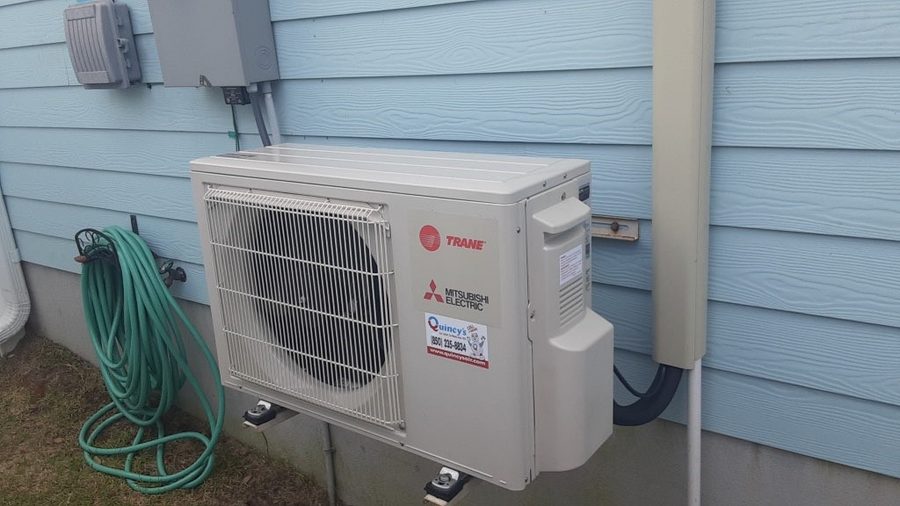
Air-source heat pumps
The overwhelming majority of Panama City homes. Reversing valves, defrost boards and sensors, contactors, capacitors, control boards, charge and airflow.
⚡
Electric air handlers and heat strips
Sequencers, elements, limit switches and the aux lockout settings that decide how often the strips are allowed to run at all.
🔥
Gas furnaces
A minority here, usually older homes with gas service. Ignitors, flame sensors, pressure switches, draft inducers and heat exchangers.
🔌
Dual-fuel systems
Heat pump plus gas furnace on one thermostat. The changeover logic is where these normally go wrong, and it is often mistaken for a failed compressor.
🏠
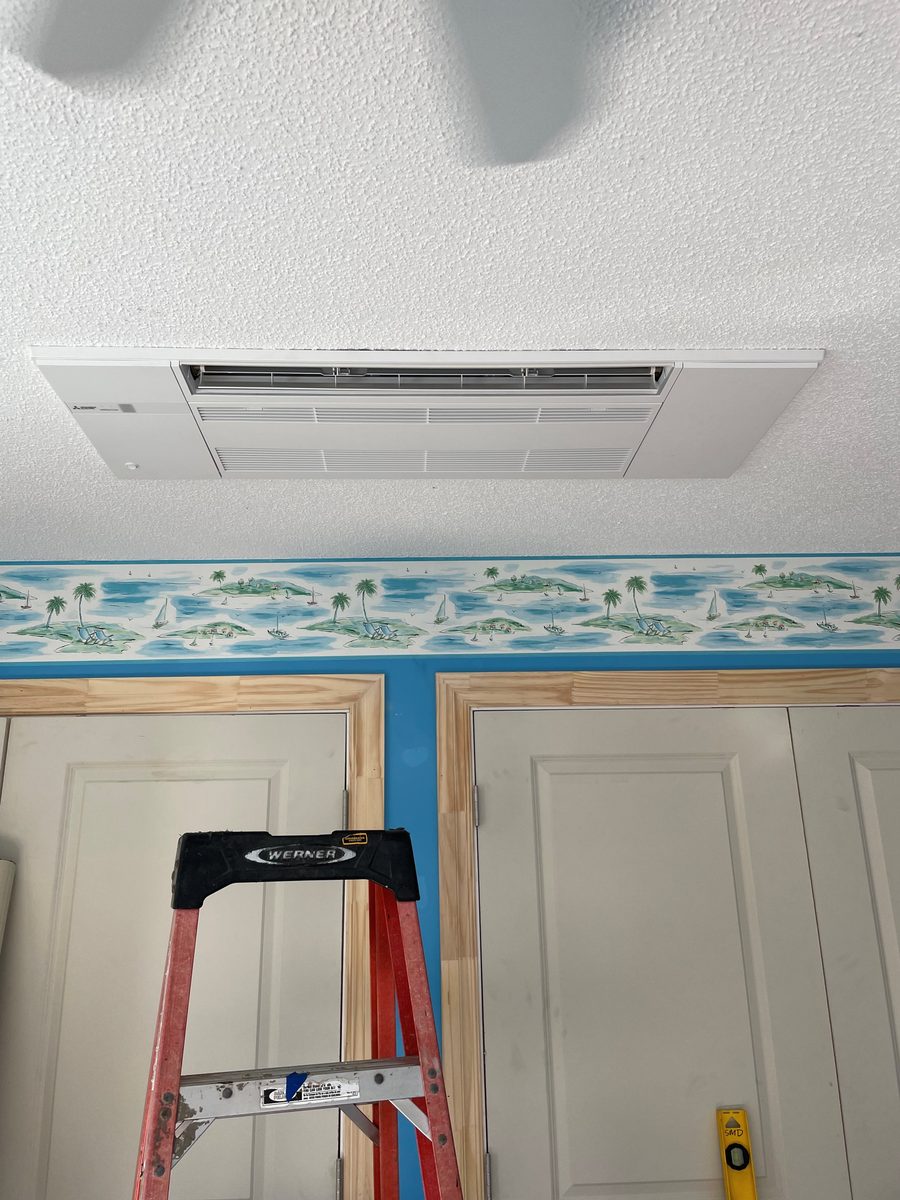
Ductless mini-splits
Wall units and ceiling cassettes, including the ones added onto converted garages and Florida rooms where the main system never reached properly.
📌
Thermostats and controls
Heat pump thermostats are wired differently from furnace thermostats. A wrongly configured replacement is one of the more common causes of strips running all winter.
The honest version
Repair it, or replace it?
We give you both numbers on site and let you decide. Here is roughly how the decision goes.
Usually worth repairing
Even on a 15-year-old system
Defrost board or defrost sensor
Reversing valve solenoid coil
Contactor, capacitor or sequencer
Heat strip element or limit switch
Thermostat wiring and aux lockout configuration
Furnace ignitor, flame sensor or pressure switch
Worth getting a replacement number
Before you spend on the repair
Failed compressor on an older system — the most expensive part into equipment the same age
A refrigerant leak in the coil on an R-22 system
A cracked heat exchanger — a safety shutdown, not a repair-and-see
Repeat failures on the same system across consecutive winters
A system that only keeps up by running the strips constantly
There is no threshold that applies to every house. A repair that gets you two more winters can be the right call on a system we would still recommend replacing eventually. How we think about replacement timing → · Financing options →
Financing available · Powered by Synchrony
Don't let cost stand between you and a cool home.
Monthly payments on new systems, major repairs & more. Subject to credit approval.
Serving Panama City since 197947+Years in Bay County
Who we are
Trusted Heating & Heat Pump Specialists in Panama City
Quincy’s has served Bay County since 1979, helping local homeowners and businesses through decades of growth, storms, rebuilds, Florida summers and every cold snap in between. Panama City customers choose us because they know what to expect: straightforward recommendations, experienced technicians, and consistent workmanship without high-pressure sales tactics.
Family owned and operated — not a franchise or national chain
Serving Bay County since 1979
Technicians focused on diagnosing the problem, not selling unnecessary work
Why Panama City heating calls are their own problem
Heating calls here arrive in bursts — the first hard cold snap produces more of them in three days than the rest of the winter combined.
Inland Bay County is colder than the beach
Panama City drops below freezing on nights when Panama City Beach never quite gets there. The same equipment model behaves differently five miles inland, and heat pumps that cope fine in PCB start leaning on their backup strips here.
You probably do not have a furnace
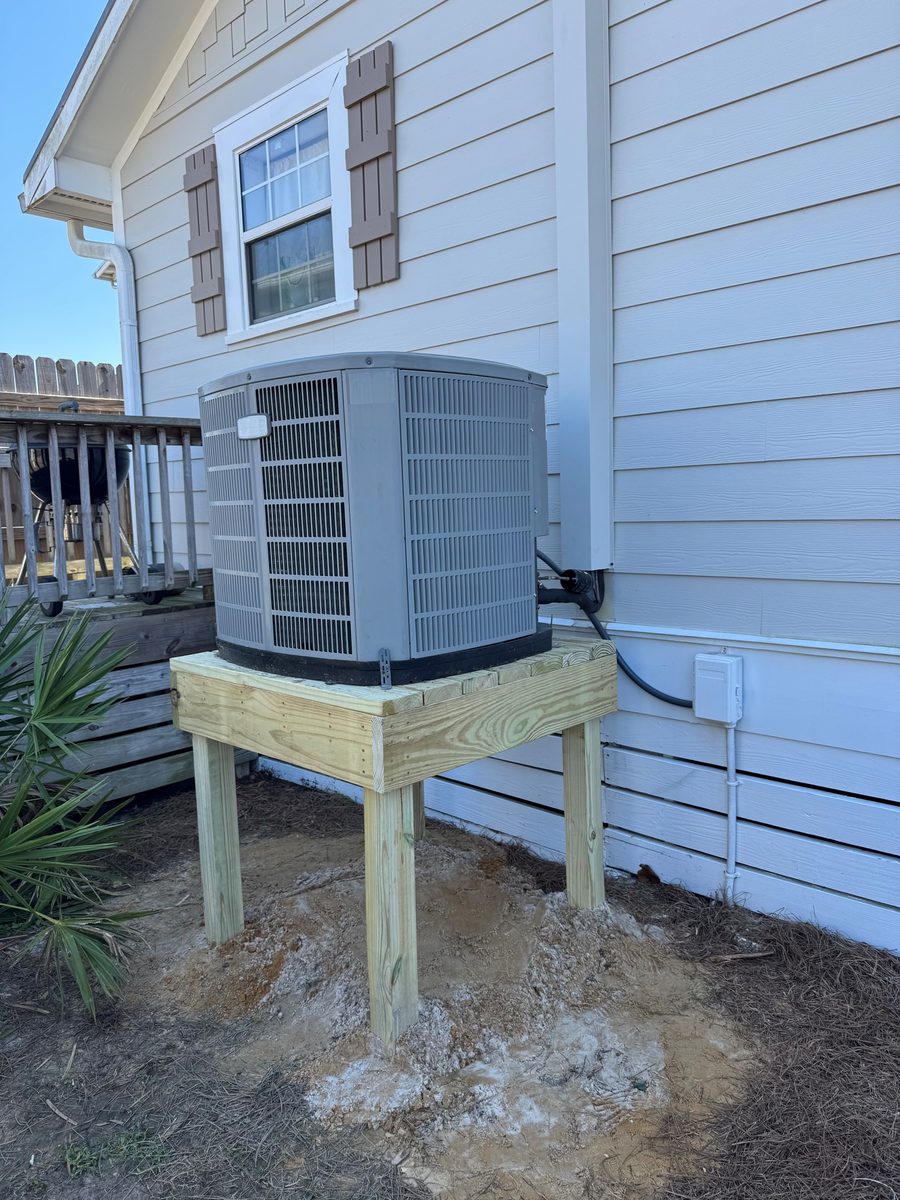
Most Bay County homes heat with the outdoor unit that cools them in summer, running in reverse. If there is no gas service to the property, there is no gas furnace. The faults, the parts and the repair costs are completely different — which is why searching “furnace repair” often gets you the wrong company.
Older housing stock in 32401 and 32405
Forest Park, St. Andrews and the Cove have plenty of houses where the equipment is fine and the heat is escaping through uninsulated attic ductwork faster than the system can produce it. Diagnosing that before quoting equipment saves people thousands.
If you want the detail
What actually goes wrong, fault by fault
These are the faults behind most Panama City heating calls, in roughly the order we find them. Open the ones that sound like your system.
The reversing valve did not reverse
A heat pump is an air conditioner that can run backwards. The component that flips it is the reversing valve, and it is the single most heat-specific failure point on the system — because it has been sitting in one position since last February.
When the valve sticks, the system keeps running and the thermostat keeps calling, but the house does not get warm. The backup heat strips quietly take over, so you may not notice anything is wrong except that the air feels lukewarm rather than hot and the bill goes up. A stuck valve, a failed solenoid coil, or a control board that is not energizing it are all repairable — and all easy to miss if the technician only checks whether the unit is “running”.
The defrost cycle is not working properly
On a cold, damp Panama City night the outdoor coil frosts over — that is normal. The system is designed to notice, briefly switch into cooling mode to melt the ice off the outdoor coil, and switch back. What is not normal is a unit that stays iced over.
A failed defrost board, a bad defrost sensor, or a low refrigerant charge will all leave the outdoor unit encased in ice, at which point it stops being able to pull any heat from the outside air at all and hands the whole job to the heat strips. If you have walked outside on a cold morning and found the outdoor unit looking like a block of ice that has been there a while, that is the fault, and it will not fix itself.
Auxiliary heat strips running when they should not be
This is the one that costs money rather than comfort. Electric resistance heat is roughly two to three times more expensive to run than a working heat pump, and it is designed as a supplement for the coldest hours — not as your heating system.
It ends up running full-time for several reasons: the heat pump has failed and the strips are covering for it; the thermostat is set to emergency heat and nobody turned it back; the aux lockout is configured badly so the strips engage far above the temperature where they are actually needed; or someone is turning the thermostat up in big jumps, which triggers the strips every time.
That last one is worth knowing on its own: with a heat pump, a large temperature jump tells the thermostat that it needs help fast, and the strips come on. Setting the thermostat and leaving it alone genuinely costs less than turning it up when you feel cold. If your January bill was a shock, this is usually where it came from.
Low refrigerant, dirty coils, and things that only look like heating faults
A heat pump with a low refrigerant charge will often still cool passably in summer and then fail visibly in winter, because moving heat into a house from 35°F outdoor air is the harder direction. Plenty of “the heat stopped working” calls are actually a refrigerant leak that has been developing quietly since August.
Similarly, a filthy indoor coil or a collapsed filter restricts airflow, and restricted airflow shows up as weak, lukewarm air from the vents — which feels exactly like a heating failure. And in older Forest Park and St. Andrews houses, sometimes the equipment is fine and the heat is simply escaping through uninsulated attic ductwork faster than the system can produce it.
We check all of it before recommending a repair, because replacing a part that was not the problem is how people end up paying twice.
A minority of Panama City properties — usually older homes with gas service, or dual-fuel systems installed deliberately — do have a gas furnace. If that is you, the failure list is different: ignitors, flame sensors, pressure switches, draft inducers, and heat exchangers.
We service gas furnaces as well, and we take the safety side of it seriously. A cracked heat exchanger is not a repair-it-and-see situation, and any furnace that is short-cycling on a limit switch or has soot around the burners gets shut down rather than nursed along. If you genuinely have gas heat, say so when you call and we will bring the right parts.
Local to Bay County
Local HVAC Service for Panama City, FL
Quincy’s Heating & Air is based just across the bridge in Panama City Beach and has served homeowners and businesses throughout Bay County since 1979. Our local team provides AC repair, maintenance, installation, and heating services throughout Panama City, including ZIP codes 32401 and 32405.
The nine we are asked most often, answered straight. If yours is not here, ask on the phone — it is a normal question and we would rather you had the answer before we come out.
Still not sure what is wrong? Describe what the system is doing and we will tell you what it is likely to be.
Do I have a furnace or a heat pump in Panama City?
Almost certainly a heat pump. The overwhelming majority of Bay County homes heat with the same outdoor unit that cools the house in summer, running in reverse. If there is no gas service to the property, you do not have a gas furnace. This matters because the faults, the parts and the repair costs are completely different.
Why is my heat pump blowing cool or lukewarm air?
Heat pump air is genuinely cooler than furnace air — typically in the 90s rather than 120°F+ — so it can feel weak even when the system is fine. But air that is barely warm usually means the reversing valve has not shifted into heating, the refrigerant charge is low, the outdoor coil is iced over, or the system is defrosting. If the house is not actually getting warmer, it is a fault, not a characteristic.
What does EM HEAT on my thermostat mean?
Emergency heat runs the electric heat strips only and shuts the heat pump out entirely. It is meant for when the heat pump has failed. If EM HEAT is on and you did not deliberately set it — or you set it during a cold snap and never switched it back — you are heating your house the most expensive way possible. Switch it back to AUTO or HEAT and, if the house stops warming, call us.
Why was my January power bill so high in Panama City?
Nine times out of ten it is the electric auxiliary heat strips. When a heat pump cannot keep up or has failed, the system falls back on electric resistance heat, which costs roughly two to three times as much to run. The house stays warm so nothing seems wrong — the bill is the first symptom. If your bill jumped after a cold snap, it is worth having the system checked.
My outdoor unit is covered in ice. Is that normal?
A light frost that clears within a defrost cycle is normal. A unit encased in ice that stays that way is not — it usually means a failed defrost board or sensor, or a low refrigerant charge. An iced coil cannot absorb heat from the outside air, so the system hands everything to the backup heat strips. Do not chip at the ice; turn the system to emergency heat to keep the house warm and call us.
How much does heating repair cost in Panama City?
We charge a flat trip charge for the diagnostic visit, quoted to you before we come, so there is no uncertainty about that part. The repair itself depends entirely on what failed — a defrost sensor and a compressor are not comparable numbers. You get the repair price in writing before any work starts, and if the system is old enough for replacement to be a genuine question you get that number too.
Do you offer after-hours heating repair in Panama City?
Yes, for genuine no-heat situations — especially with a hard freeze forecast or anyone in the house who is elderly, very young, or medically vulnerable to cold. We are not a 24-hour call center; the phone is answered by someone at the company. After-hours visits cost more than a weekday call, so if the house is warm and the complaint is a noise or an uneven room, we will tell you it can wait.
Is it worth repairing a heat pump that is 15 years old?
It depends entirely on what failed. A defrost board, a contactor, a sequencer or a reversing valve solenoid on a 15 year old unit are all sensible repairs. A failed compressor on the same unit almost never is — you would be putting the most expensive part into a system whose other components are the same age. We give you both numbers on site and let you decide.
How often should heating be serviced in Bay County?
Once a year, in the fall, before the first cold snap. Because heating equipment here sits idle for ten months, the fall visit is genuinely valuable — it is when we find the stuck reversing valve, the failed defrost sensor and the burnt sequencer while it is still 70°F outside and nobody is cold. Our maintenance plan covers a spring and a fall visit for $292 a year on a single-system home.
More in Panama City
Other Quincy’s services in 32401 & 32405
Heating is one part of what we do here. Same crew, same pricing approach, same written warranty.
Panama City ZIP codes served for heating repair: 32401 and 32405. Not sure whether you are inside the area? Call and ask — we will tell you straight away.