
4.8 · 173 reviews
📞 (850) 235-8834 | Mon–Fri 7am–5pm · Sat–Sun 8am–5pm (Emergency)
Panama City, FL · 32401 & 32405

AC Installation in Panama City, FL

Replacing a system in Panama City is not the same job as replacing one on the beach. The houses are older, the ductwork is frequently older than the air conditioner attached to it, and a lot of the units we are asked to replace were oversized when they went in. We measure before we quote — then you get a written price and, in most cases, an install the next business day.

📏 Load-calculated sizing, not guesswork
📜 Written price before anything is ordered
💵 Financing available
Home/Areas/Panama City/AC Installation
Local HVAC Intelligence

What makes an AC replacement in Panama City different

Inland Bay County housing stock, decades-old duct systems, and a history of oversized equipment mean the outdoor unit is rarely the whole job.

🏠

The ducts are usually older than the AC

In St. Andrews, The Cove, Forest Park and much of downtown, the duct system predates the air conditioner sitting outside — sometimes by decades. A new condenser bolted onto leaking, undersized ductwork cools no better than the one it replaced.

Ductwork & Insulation →
📏

Right-sizing usually means smaller

A lot of Panama City systems were sized by rule of thumb and came out too big. An oversized unit hits the set point fast, shuts off before it has pulled humidity out of the air, and leaves a house that reads 72°F and still feels damp.

How AC sizing works →
🌪

Inland heat load, not beach heat load

Without the Gulf breeze that beachside properties get, a Panama City system holds the same indoor temperature with longer run cycles. That belongs in the sizing math and in the efficiency conversation — run hours are what turn a SEER2 number into an actual bill.

SEER2 in Florida →
🔧

Repair or replace — with the numbers shown

We see a lot of 12–18 year old units across Forest Park, St. Andrews and downtown. Some of them are worth fixing. We tell you what the repair costs, what the replacement costs, and what the age and refrigerant type mean before you decide.

When to replace an AC →
🧊

The refrigerant transition is real

New systems ship with R-454B rather than R-410A. If you are replacing a very old R-22 unit, the indoor coil and lineset matter as much as the condenser — we will tell you plainly what has to be changed and what can stay.

R-410A vs R-454B →
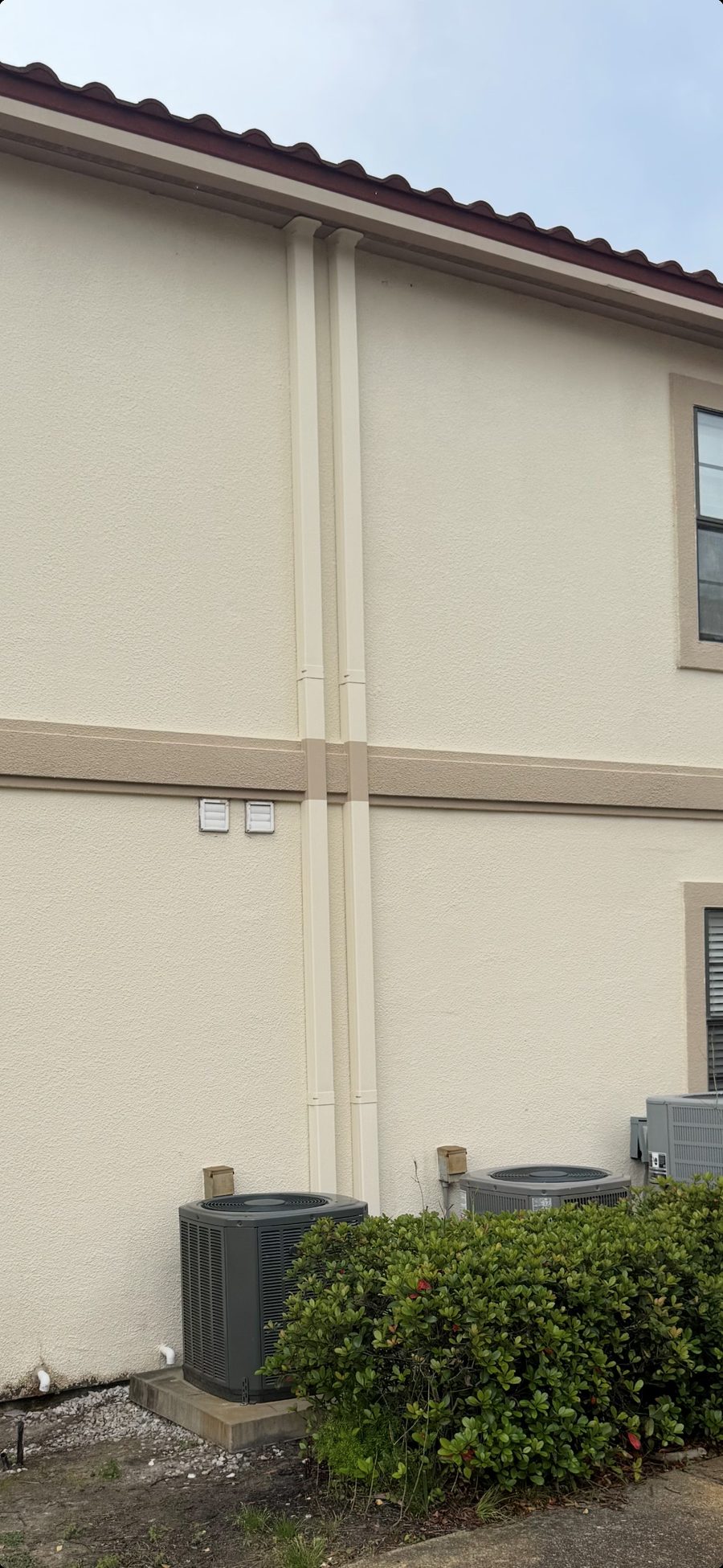
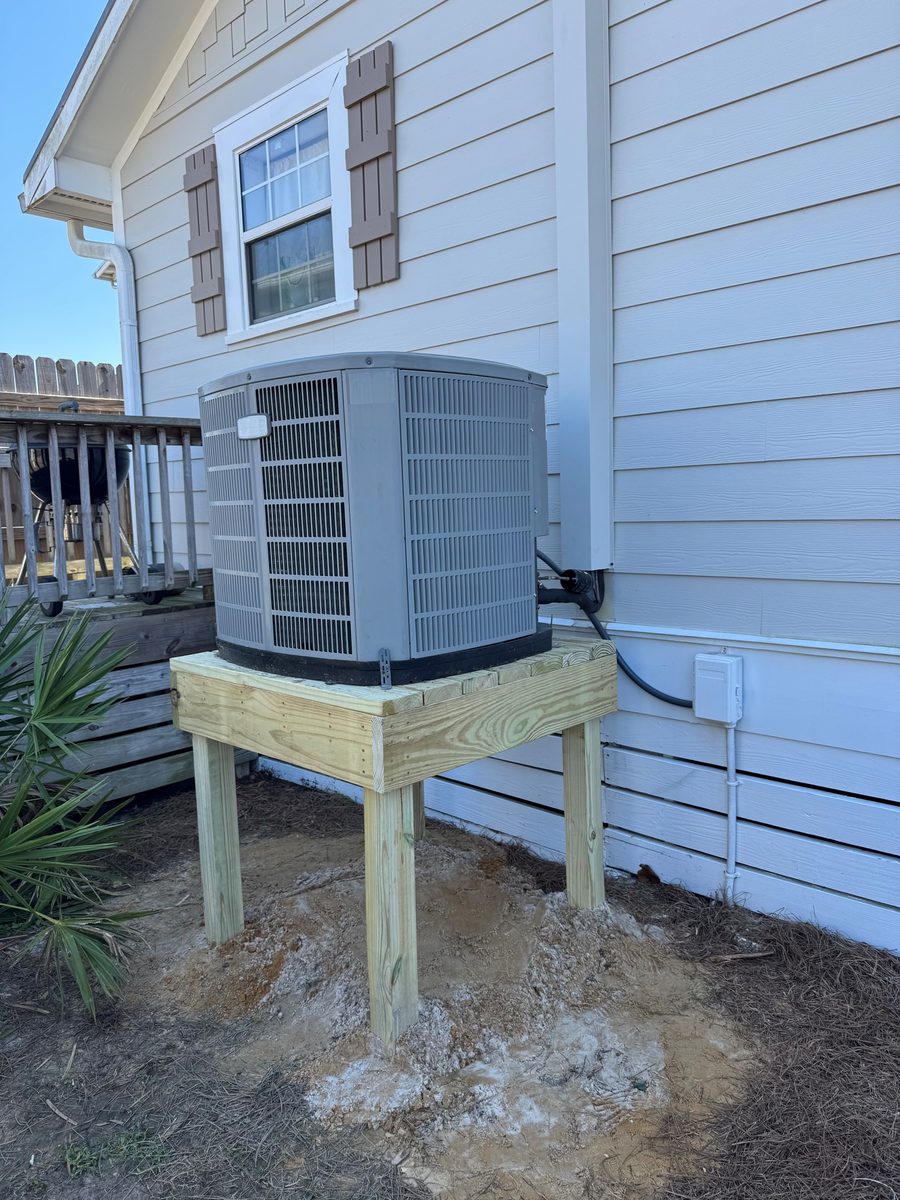
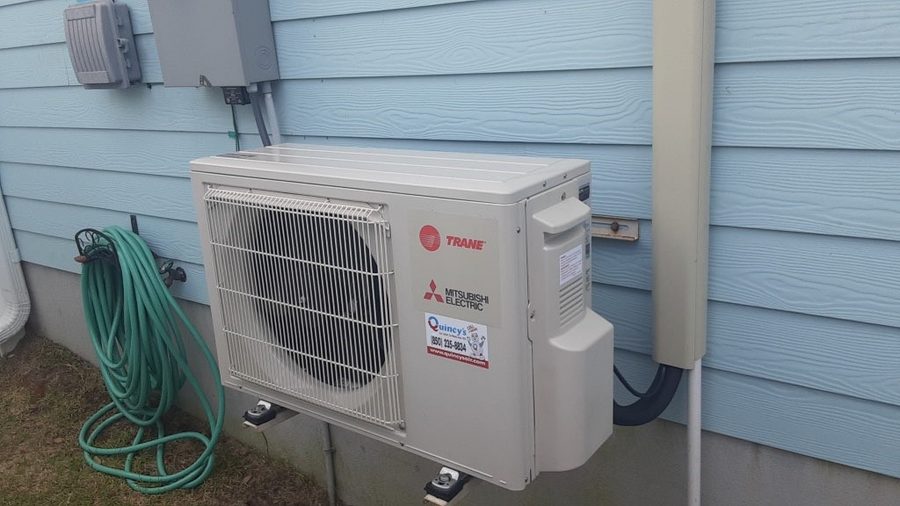
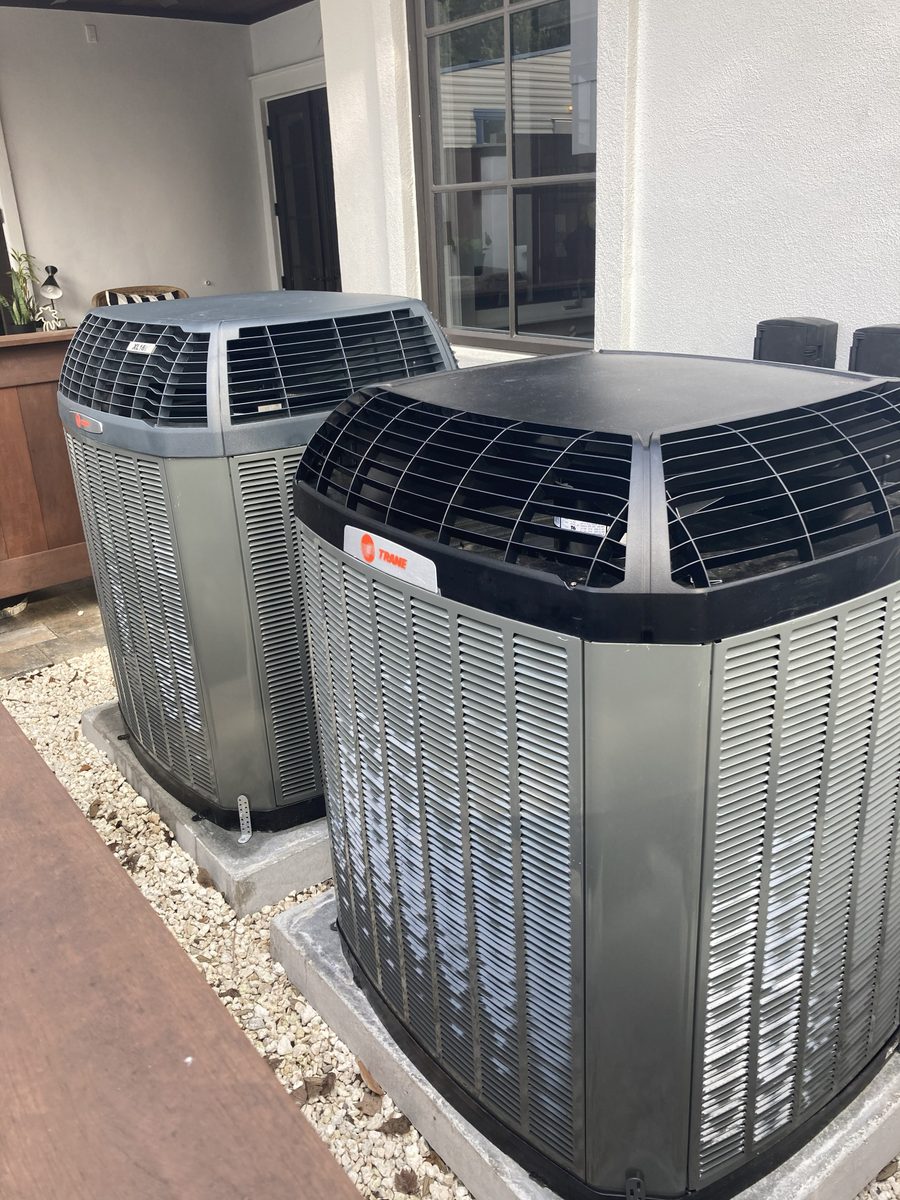
Two newly installed outdoor AC condensing units at a Panama City FL home Installing in Bay County since 1979
47+ Years Written Pricing Next-Day Installs

Real installs in real Panama City neighborhoods.

Panama City ZIPs we install in

32401 32405

Neighborhoods

St. Andrews The Cove Forest Park Downtown Panama City

Nearby installation areas

Signs it is replacement time, not repair time

  • A failed compressor on a system over 15 years old
  • R-22 refrigerant and a leak that keeps coming back
  • Two or more repairs in the last two years
  • Rooms that have never cooled evenly since the last install
  • A power bill climbing every summer with no change in habits

What we check before quoting a system

  • Conditioned square footage and actual load, room by room
  • Duct condition, leakage and return sizing
  • Attic and wall insulation levels
  • Existing lineset, indoor coil and electrical service
  • Drain routing and condensate handling
  • Whether a repair still makes better financial sense

Sized on measurement

We calculate the load rather than matching the old nameplate.

Written price up front

Nothing gets ordered before you have the number in hand.

Common sizes in stock

Most Panama City replacements go in the next business day.

Ductwork addressed

We tell you if the ducts will undercut the new system.

Financing available

For full replacements, when that is genuinely the right call.

Not sure whether to repair the system you have or replace it?

We will diagnose it first, give you both numbers, and tell you honestly which one we would choose if it were our house.

How the job actually runs

Installing a new AC system in Panama City, start to finish

Most replacement quotes people show us are one line long: a model number and a price. That tells you nothing about whether the system will work in your house. Here is what we do instead, and why each step matters specifically in 32401 and 32405.

We start with the ductwork, not the equipment

The single most common reason a brand-new system disappoints in Panama City is that nobody looked at the ducts. A great deal of the housing stock inland is mid-century or older, and duct runs in those homes have been patched, extended into additions, crushed by attic storage, and left with insulation that gave up years ago.

A duct system leaking a quarter of its air into a 130°F attic will make a new 16 SEER2 system perform like a tired old one, and you will feel it most in the rooms farthest from the air handler. So before we price equipment we look at supply and return sizing, obvious leakage at the boots and plenum, and insulation condition. Sometimes the answer is that the ducts are fine. Sometimes it is a few hundred dollars of sealing. Occasionally it is a bigger conversation — but you get to have it before you have spent the money, not after.

Then we size the system — and it is often smaller than what you have

This is the part that surprises people. A lot of Panama City homes are running equipment a half-ton to a full ton larger than the house actually needs, because at some point somebody sized it by square footage on the back of an invoice.

Oversizing feels like it should be safe. It is not. A unit that is too large cools the air down to the thermostat set point very quickly and then shuts off — and because dehumidification only happens while the system is running, it switches off before it has pulled meaningful moisture out of the house. The result is the complaint we hear constantly: the thermostat says 72 and the house still feels sticky. Correct sizing runs longer, quieter cycles and takes the humidity with it.
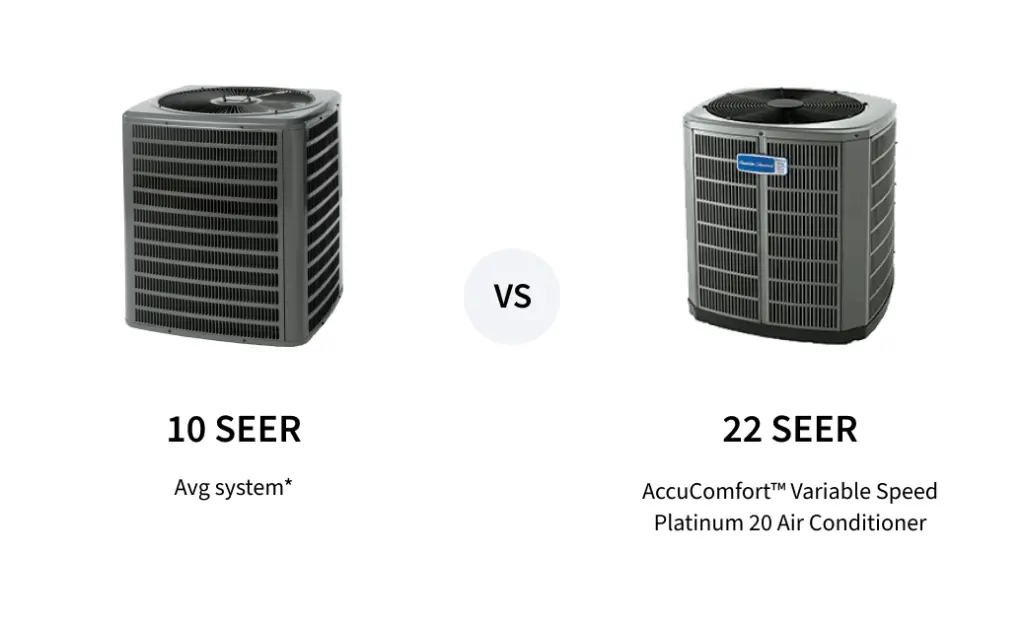
We work from conditioned square footage, ceiling heights, window area and orientation, insulation, and duct capacity. If the honest answer is that you need a smaller system than the one you are replacing, we will tell you, and you will pay less for it.

Equipment, refrigerant, and what the efficiency number really buys you

We install American Standard and Comfortmaker — we are a Comfortmaker Elite Dealer — and for most Panama City homes the sensible range is a solid single-stage or two-stage system rather than the top of the catalog. Two-stage equipment is genuinely worth considering here, because the low stage runs longer and does far more for humidity than a single-stage unit cycling on and off.

New systems now ship with R-454B refrigerant instead of R-410A. That mostly matters to you in one situation: if you are replacing a very old R-22 system, the indoor coil and sometimes the lineset have to change too. Anyone quoting you a condenser-only swap on an R-22 system is either not explaining the job or not doing it properly.

On efficiency — a higher SEER2 rating is worth more in Panama City than it is on the beach, precisely because inland run hours are longer. But the gap between a good mid-range system installed correctly and a premium system installed carelessly is not close. Installation quality is worth more than the sticker rating. See how our installations work →

Permits, install day, and what happens afterwards

Replacements inside Panama City city limits are permitted and inspected, and we handle that — you should be suspicious of any contractor who suggests skipping it, because it is the inspection that catches an undersized disconnect or a lineset that was never properly evacuated.

A straightforward changeout is a one-day job. We protect the floors, recover the old refrigerant properly, set the new equipment, pull a deep vacuum on the lineset before charging (this is the step that quietly separates good installs from bad ones), commission the system, and then actually show you the readings rather than just handing over a manual.

You get the manufacturer warranty on the equipment and our workmanship warranty in writing. Registering the equipment matters — we do it for you. And most manufacturer warranties require documented annual maintenance to stay valid, which is worth knowing before rather than after. Panama City maintenance plans → · Financing options →

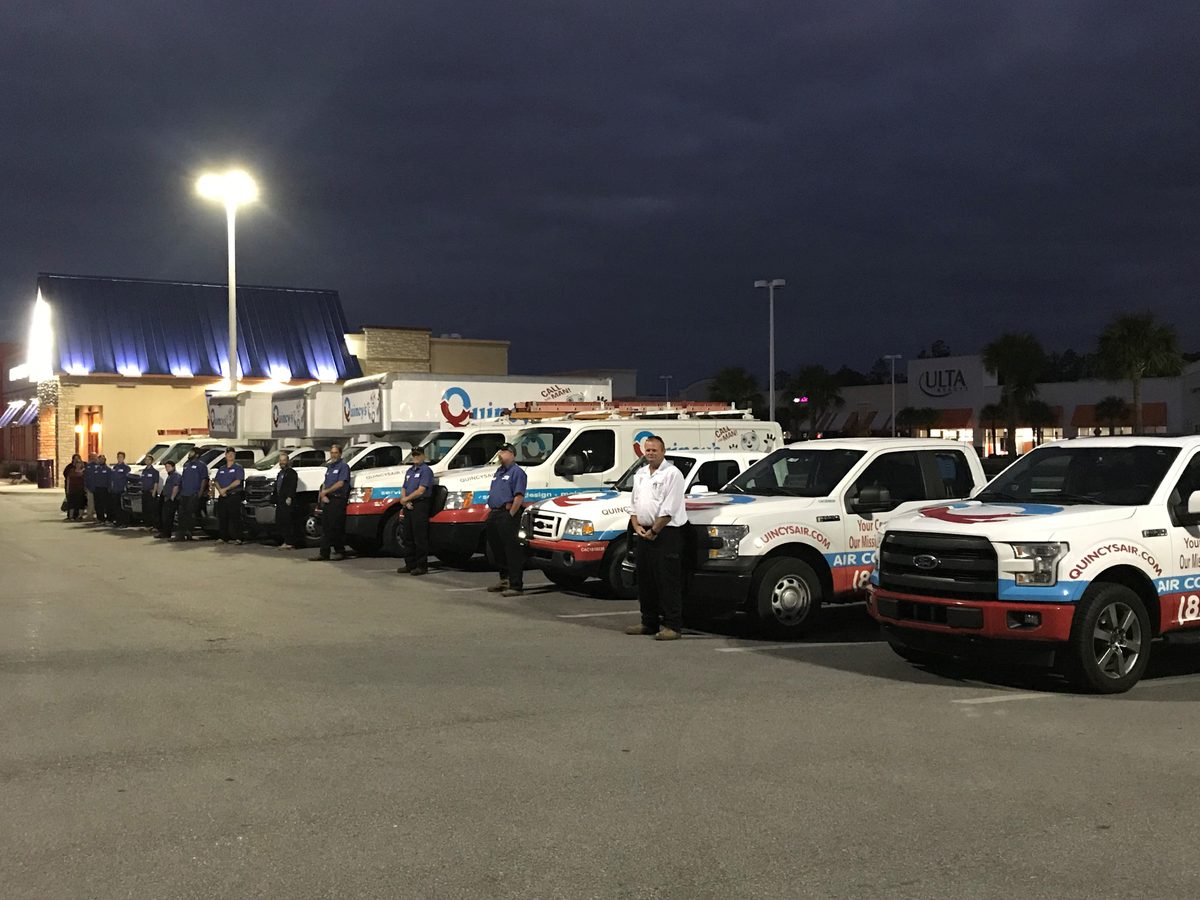
Quincy's Heating and Air service fleet, family owned in Bay County since 1979
Why Panama City homeowners let us do the install

The company that installed it is still here in ten years

A system replacement is a long relationship, not a transaction. Whoever installs it is who you call when something needs adjusting in year three and who honors the labor warranty in year five. Quincy's has been on Highway 79 since 1979 — same family, same shop, through every boom, bust and hurricane Bay County has had.

  • Family owned and operated — not a franchise, not a chain
  • 47 years of local history in Bay County
  • Technicians paid to diagnose, not commissioned to sell
  • 4.8 stars on Google across 173 reviews
  • Florida licensed and insured — Lic. CAC1818239
  • Workmanship warranty in writing on every install
Related services

Other things we handle in Panama City

AC Maintenance

Keeping the new system under warranty and running at the efficiency you paid for. Panama City maintenance →

Heating & Heat Pumps

Your new system heats the house too. Here is what that means on a January cold snap. Panama City heating repair →

Lynn Haven & Callaway

We install across Bay County. Lynn Haven → · Callaway →

Common questions

AC installation questions Panama City homeowners ask

How much does a new AC system cost in Panama City?

It depends on the size of the system, the efficiency level, and whether any ductwork or electrical work is needed — which is why we do not quote over the phone. What we will commit to is that you get a written price before anything is ordered, with the work itemized, and no pressure to decide on the spot. Call (850) 235-8834 and we will come measure.

How long does an AC replacement take?

A straightforward changeout — same location, existing ductwork in good shape — is a one-day job, typically finished the same afternoon. Adding ductwork, moving equipment, or converting from an older R-22 system with a coil and lineset change can run into a second day. We tell you which one you are before we start.

Do I need a permit to replace an AC in Panama City?

Yes, and we pull it. Equipment changeouts inside Panama City city limits are permitted and inspected. If a contractor offers to skip the permit to save you money, that should end the conversation — the inspection is what catches an undersized disconnect or an improperly evacuated lineset, and an unpermitted install can cause problems when you sell the house.

Should I just replace the outside unit and keep the indoor coil?

Almost never, and on an R-22 system definitely not. The outdoor unit and indoor coil are engineered as a matched pair; mismatching them costs you efficiency, voids most manufacturer warranties, and often produces a system that never quite performs. If someone quotes you a condenser-only swap on an old system, ask them to put the warranty position in writing.

Will a bigger AC unit cool my Panama City house better?

No — and this is the most expensive misconception in HVAC. An oversized system reaches the thermostat set point quickly and shuts off before it has removed humidity from the air, which is why so many homes read 72°F and still feel clammy. Correct sizing runs longer cycles at lower cost and actually dries the house out. A properly sized replacement is frequently smaller than what it replaces.

Do you offer financing on a new system in Panama City?

Yes. Financing is available on full system replacements, and we will walk you through what the monthly figure actually looks like alongside what you are currently spending running an old system. See our financing page or ask when we quote.

What efficiency rating do I need in Panama City?

For most inland Bay County homes, a well-installed system in the mid efficiency range is the sensible choice, with two-stage equipment worth the upgrade if humidity is a persistent complaint. Panama City run hours are longer than beachside ones, so efficiency pays back faster here — but a mid-range system installed properly will outperform a premium system installed carelessly every time.

How long should a new AC last in Panama City?

Twelve to seventeen years is a realistic expectation for an inland Bay County home with annual maintenance. Beachside systems fight salt corrosion and often come in shorter; inland systems mostly die of run hours, coil fouling and neglected drain lines. Annual maintenance is also what keeps the manufacturer warranty valid, which people often discover too late.

Ready for a straight answer on a new AC in Panama City?

We measure, we show you the numbers, and we put the price in writing. No commission-driven sales pitch.

What our customers say

4.8 out of 5 across 173 Google reviews

Read our Google reviews
📞 CallGet a Quote