Callaway sits east of the bay with no Gulf breeze to soften a cold night, on housing stock that mostly predates modern insulation standards. Put an aging heat pump in that situation and it leans hard on its electric backup heat — which works, keeps the house warm, and produces a January power bill that somebody has to pay. Usually the person who did not cause it.
Older, leakier houses, aging heat pumps, thermostats nobody explains to the next tenant, and attic ductwork losing heat before it reaches a room.
Somebody was cold during a January snap, found the setting that made the house warm fast, and left it there. Emergency heat locks the heat pump out entirely and runs pure electric resistance. The house is fine. The bill is not.
Thermostat problems →A 1970s Callaway house with thin attic insulation loses heat faster than the heat pump can produce it on a 30°F night, so the strips engage to close the gap. The equipment is not broken — the building envelope is losing the argument.
Insulation & ductwork →Warm supply air traveling through leaky, poorly insulated attic ductwork arrives noticeably cooler than it left, or does not arrive at all. In winter that shows up as a back bedroom that never warms up and a system that never satisfies.
Why rooms differ →Reversing valves, defrost boards and heat strip sequencers sit untouched from February to December. On older Callaway equipment those parts are what fail on the first genuinely cold night, all across the neighborhood, at the same hour.
Heat pump not heating →A failed compressor on a system already in its teens is a different conversation than a failed sequencer. We price both the repair and the replacement so you can see the choice rather than take our word for it.
Callaway AC installation →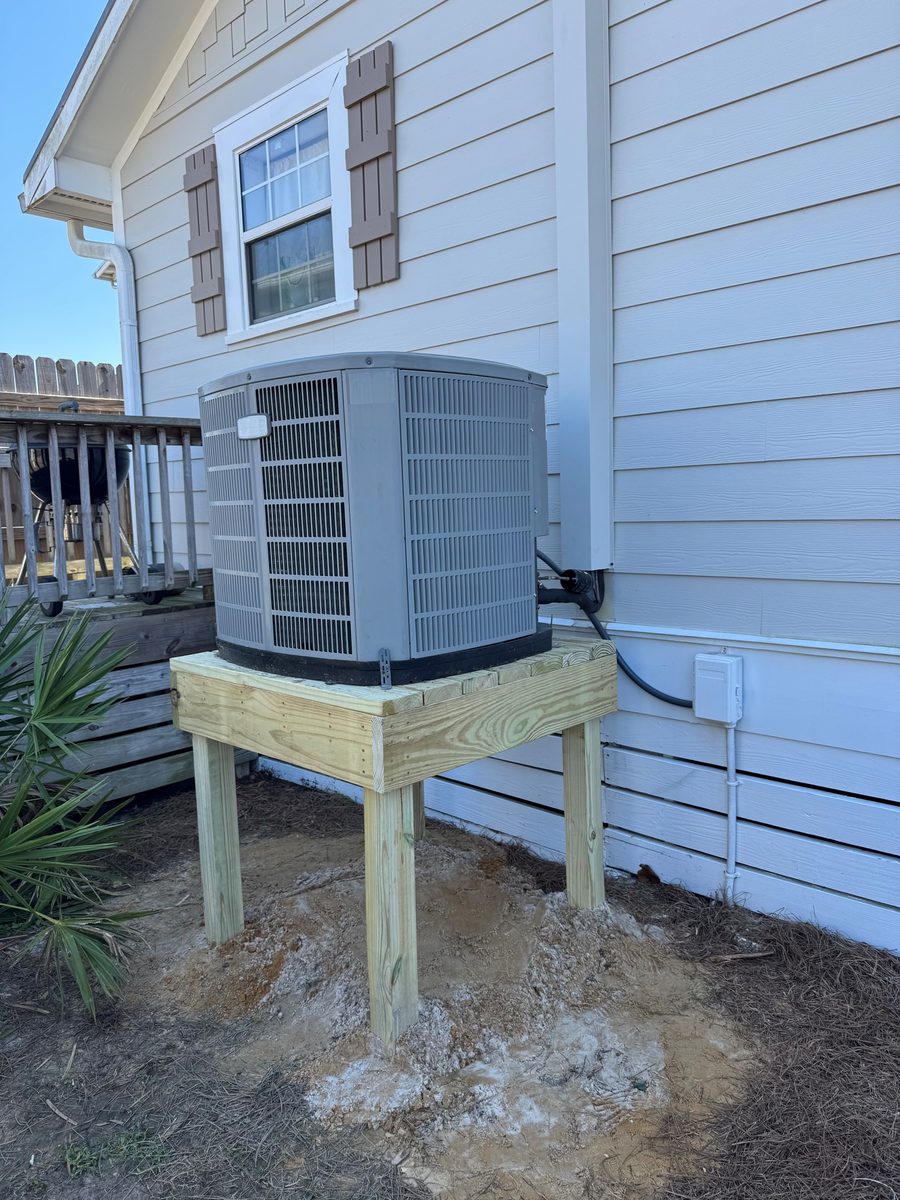
The unit that cools the house in August is the same one heating it in January.
You will know exactly what drove the January number.
The diagnostic cost is known before we start.
We can coordinate access with your tenant directly.
Especially with a hard freeze forecast.
Repair price and replacement price, side by side.
That is nearly always electric backup heat running when it should not be — either because the heat pump has quit and the strips are quietly covering, or because the thermostat is in the wrong mode.
Heating faults in Callaway cluster around three things: thermostats nobody explained, houses that lose heat faster than the equipment makes it, and older heat pumps whose winter-only components have been sitting idle since February. Here is each of them.
Emergency heat exists for one reason: to keep a house warm when the heat pump has genuinely failed. It shuts the outdoor unit out of the picture entirely and heats using electric resistance strips, which cost roughly two to three times as much to run for the same warmth.
It gets switched on innocently. Somebody is cold in January, works through the thermostat settings, finds the one that produces hot air immediately, and stops there. Nobody switches it back, because nothing seems wrong — the house is warm. The consequence arrives three weeks later on a bill.
In a rental this is worse, because the person who set it and the person paying for it are frequently not the same person, and neither may still be there when the bill lands. It is worth walking through your own thermostat now, while it is warm: if it reads EM HEAT or EMERGENCY and your heat pump is working, put it back to AUTO or HEAT. If the house then stops warming up, you have found a real fault and it is worth a call. Why power bills spike →
A meaningful share of Callaway no-heat calls turn out to be a heat pump doing exactly what it was designed to do, in a house that is defeating it. Much of this housing stock dates to the 1960s through the 1980s, when attic insulation standards were a fraction of current ones, and plenty of it has never been upgraded.
On a 30°F night, a heat pump extracts heat from outdoor air — which is efficient but not fast. If the house is bleeding heat through an under-insulated ceiling as quickly as the system delivers it, the indoor temperature stalls short of the set point, the thermostat concludes the heat pump needs help, and the backup strips fire. Every night. All winter.
The diagnosis matters, because replacing the equipment does not fix it. A new heat pump in the same house will lean on its strips too. Attic insulation and duct sealing are dramatically cheaper than a system replacement, and on a house like that they do more for the winter bill than any equipment upgrade would.
A heat pump is an air conditioner that can run in reverse, and there is a small set of parts involved only in the reverse direction. The reversing valve that flips refrigerant flow. The defrost board and sensor that clear ice from the outdoor coil. The sequencers that stage the backup heat strips.
None of those move between February and December. On equipment that is already in its teens — which describes a lot of Callaway — a component that has sat in one position for ten months is exactly the thing that does not wake up on the first cold night. That is why our heating phone rings in bursts: it is not coincidence, it is a whole neighborhood's idle parts being asked to work on the same evening.
The tell for a stuck reversing valve is a system that runs continuously and produces air that is barely warm while the house creeps up a degree an hour. The strips are doing all the work and the heat pump is contributing nothing. It is repairable, and it is easy to miss if the technician only confirms the unit is running. More on heat pumps not heating →
No-heat in a rental is a coordination problem as much as a technical one. The tenant is cold and calling. The owner may be out of the area. Nobody wants an after-hours rate for something that could have waited, and nobody wants a family without heat overnight either.
What we do is straightforward: we will talk to the tenant directly to establish what is actually happening, coordinate access, and call the owner with a diagnosis and a price before doing work. If the house is warm because the strips are covering and the fault can wait until a weekday rate, we say so plainly rather than billing an emergency visit.
If you own several Callaway properties, the fall maintenance visit is the version of this that costs least — it finds the stuck valve and the burnt sequencer in October rather than at nine o'clock on the first freezing night. Callaway maintenance plans →
Not everything in Callaway is a heat pump. Some older houses have gas service and a genuine gas furnace, and a number of small and older properties still heat with electric wall units or baseboard heaters.
Gas furnaces have their own failure list — ignitors, flame sensors, pressure switches, draft inducers, heat exchangers — and we take the safety side seriously. A cracked heat exchanger is not something to nurse through one more winter, and a furnace short-cycling on its limit switch gets shut down rather than patched.
Electric wall units are a different situation again: they are cheap to fix and staggeringly expensive to run, and on a rental it is worth understanding what they are costing before deciding what to do about them. Tell us what you have when you call and we will bring the right parts.
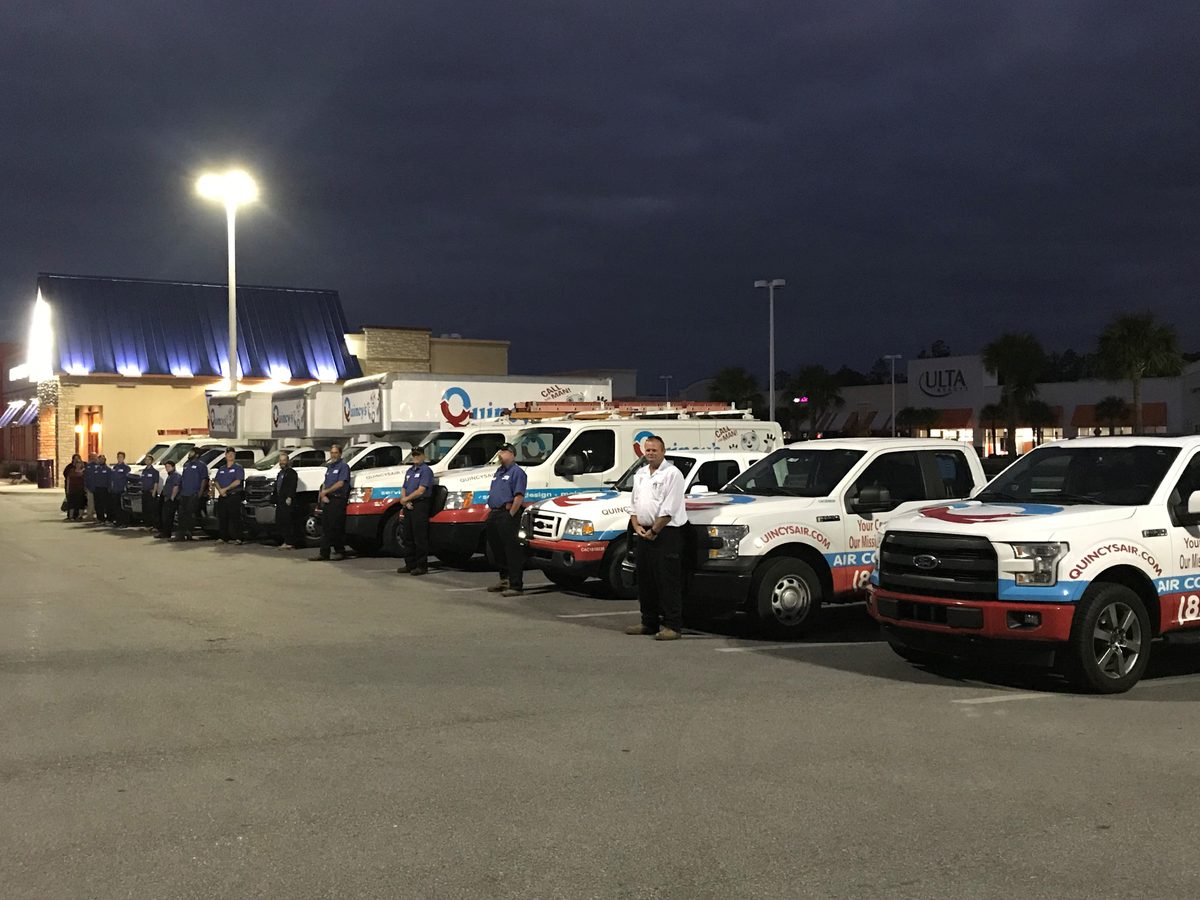
Heating in Northwest Florida is a specialist problem precisely because there is so little of it. Equipment sits idle for ten months and is then asked for everything at once, and technicians who work almost entirely on cooling miss faults that only appear in heating mode. We have worked every hard freeze this county has had since 1979.
The visit that finds a stuck reversing valve in October rather than January. Callaway maintenance →
When a compressor goes on a heat pump already in its teens. Callaway AC installation →
Heating service across Bay County. Panama City → · Lynn Haven →
Almost always the electric backup heat strips. They cost roughly two to three times as much to run as a working heat pump, and they engage whenever the heat pump cannot keep up, has failed, or the thermostat is set to emergency heat. The house stays warm the whole time, so the bill is usually the first symptom anybody notices.
Yes, if you did not deliberately set it. Emergency heat locks the heat pump out and runs pure electric resistance, which is the most expensive way to heat a house. Switch it back to AUTO or HEAT. If the house then stops getting warm, the heat pump has a genuine fault and the strips were quietly covering for it — which is worth finding out now rather than on the next bill.
Usually the ductwork rather than the equipment. Warm supply air traveling through leaky or poorly insulated attic runs arrives cooler than it left, and the room furthest from the air handler feels it first. In Callaway there is a specific version of this involving duct repairs made quickly after 2018 that have since worked loose. It is worth inspecting before anyone suggests a bigger system.
Yes. We will talk to your tenant directly to establish what is actually happening, coordinate access, and call you with a diagnosis and a price before any work is done. If the house is warm and the fault can safely wait for a weekday rate, we will tell you that rather than bill an after-hours visit.
It depends entirely on what failed. A defrost board, a sequencer, a contactor or a reversing valve solenoid are all sensible repairs at that age. A failed compressor almost never is — you would be installing the single most expensive component into a machine whose every other part is the same age. We give you both numbers on site and let you decide.
Two common causes. The reversing valve may not have shifted into heating, in which case the backup strips are doing all the work and the heat pump is contributing nothing. Or the house is losing heat through an under-insulated ceiling faster than the system can deliver it, which is common in older Callaway houses. The fixes are completely different, which is why the diagnosis matters.
Yes, for genuine no-heat situations — particularly with a hard freeze forecast or anyone in the house who is elderly, very young, or medically vulnerable to cold. We are not a 24-hour call center; the phone is answered by someone who works here. After-hours costs more than a weekday visit, so if the house is warm we will tell you it can wait.
On an under-insulated house, attic insulation and duct sealing usually do more for the winter bill than new equipment would, and they cost dramatically less. A new heat pump in a house that is bleeding heat through the ceiling will lean on its backup strips just like the old one did. We would rather tell you that than sell you a system that does not solve the problem.