
Heating Maintenance Before the First Cold Snap in Bay County
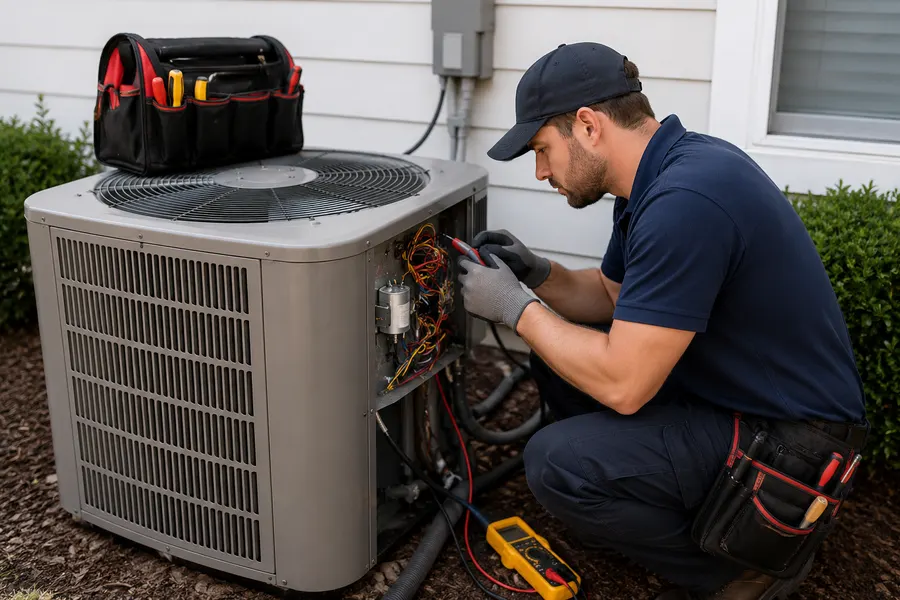
Run the heat for 15 to 20 minutes on a mild fall day, before you need it, with a clean filter in place, and you will find most of the problems that otherwise show up on the first cold night. A professional fall visit then checks what a homeowner cannot: amp draw on the heat strips, the sequencer, defrost operation, the reversing valve, refrigerant performance in heat mode and the electrical connections.
In a Bay County home the heating side of the system sits unused from spring until the first front comes through. Parts that have not moved in months get one sudden test, often on the same morning as everyone else’s. This is the fall routine that takes the surprise out of it.
- Test the heat in October, not on the first cold night. Fifteen to 20 minutes on HEAT finds most failures.
- Check the backup strips too: a few minutes on EM HEAT should make the vents blow hot.
- A dusty smell for the first few minutes is normal. A smell that hangs around is not.
- A technician checks the heat side you cannot see: strip amp draw, sequencer, defrost, reversing valve, heat-mode refrigerant performance, connections.
The 20-minute heat test to run on a mild fall day
Pick a cooler morning or evening when nobody minds the house getting a little warmer. Then:
- Start with a clean filter. Testing with a clogged one can trip a limit and send you looking for a fault that is not there.
- Switch the thermostat from COOL to HEAT and set it two or three degrees above the room temperature. A small step lets the heat pump run on its own rather than calling the strips straight away.
- Go outside after a minute or two. The outdoor fan should be turning and the compressor humming.
- Feel the vents after five minutes. Heat pump air typically leaves the registers at around 90 to 100 degrees: warm, though it can feel lukewarm against your hand. A kitchen thermometer settles the question.
- Try EM HEAT for three or four minutes. With the heat pump locked out, the strips should make the air noticeably hotter. If nothing changes, the backup is not working, and our article on heat strip and sequencer replacement cost explains the likely causes.
- Notice the smell. Dust burning off the strips smells for the first few minutes of the season. A smell that lingers, or that smells electrical, is a reason to switch off and call.
- Switch back. Return the thermostat to HEAT, or to COOL if your afternoons are still warm.
Total cost: a few cents of electricity. What you learn is whether the heat pump, the strips and the thermostat all answer when called.
Homeowner checklist before the first cold front
- Filter. Fresh before the heat test, then on its normal schedule. Our guide on how often to change an AC filter in Florida covers the intervals.
- Thermostat. New batteries if it takes them, the clock and schedule correct, and the mode where you want it.
- Outdoor unit. Clear fall leaves, pine straw and storm debris off and around it, and keep plants, toys and stored items well back so air moves freely. Do not cover a heat pump for winter. It has to breathe all season.
- Condensate drain. Your system still cools on warm October afternoons, so the drain still matters. Check that the line drips outside after a cooling run and that the pan under the air handler is dry. In heat mode the indoor coil makes no condensate, so a slow clog can hide until spring.
- Vents and returns. Move rugs, furniture and holiday boxes off registers and return grilles.
- Carbon monoxide detectors. If the house has any gas appliance (a gas furnace, water heater, range or fireplace) test the detectors the same day you test the heat.
Want the price before anyone comes out?
Tell us what the system is doing. We quote the trip charge on the call and the repair in writing on site.
What a fall maintenance visit checks that you cannot
A homeowner can confirm that heat comes out. A technician confirms that every part making it is healthy, because a heat pump hides a weak backup and a weak backup hides a weak heat pump. The fall heat-side checks are:
- Strip amp draw. Measuring the current on each element shows whether every stage is actually heating. One dead element can sit unnoticed behind a working heat pump until the coldest night.
- Sequencer and limits. Confirming the elements stage on in order and the safety limits are closed.
- Defrost operation. Confirming the system enters and leaves defrost properly, which is what keeps the outdoor coil from icing over. Our explainer on heat pump defrost mode covers what that looks like from the yard.
- Reversing valve. Confirming it shifts cleanly into heat and back.
- Refrigerant performance in heat mode. Pressures and temperatures read while heating, not just while cooling.
- Electrical connections. Tightening and inspecting terminals, the contactor and the capacitor before the strips and compressor both load the circuit.
On Quincy’s maintenance plan this is the fall half of two visits a year. The plan is $292 a year for a single-system home and includes a spring visit and a fall visit, real coil cleaning, drain line treatment, a written report after each visit, and 10 percent off any repair. Details are on our maintenance plan page. The spring visit focuses on cooling, which our spring AC checkup article describes.
Homeowner checks vs technician checks
| Check | Who | What it catches before the cold night |
|---|---|---|
| Filter | Homeowner | Limit trips and overheated strips from choked airflow |
| Thermostat batteries and mode | Homeowner | A dead display or a schedule stuck in cooling |
| 20-minute heat test and EM HEAT test | Homeowner | A heat pump or strip kit that does not answer |
| Outdoor unit clearance and drain | Homeowner | Blocked airflow outside and hidden drain clogs |
| Strip amp draw, sequencer, limits | Technician | A dead element or stage hiding behind the heat pump |
| Defrost and reversing valve | Technician | An outdoor coil that ices over, or heat that never arrives |
| Heat-mode refrigerant performance | Technician | A low charge that weakens heating first |
| Electrical connections | Technician | Loose or burned terminals that fail under winter load |
Book the fall visit while it is still warm
Heat side tested in heating mode, strips measured, written report. Panama City, Lynn Haven, Callaway and the Beach.
📞 Call (850) 235-8834Why fall timing matters in Bay County
Our winters are mostly long, mild stretches broken by a handful of nights near or below freezing. The heat barely runs for weeks, then a cold front swings through and a large share of Bay County switches from COOL to HEAT on the same evening.
That is when idle parts get found out, all at once. A sequencer that stuck over the summer, a defrost sensor that drifted, a breaker that has been weak for a year: they all wait for the same morning. Phones get busy, and the households that call first get seen first.
A fault found in October is a scheduled repair on a 70-degree afternoon, with time to compare a price. The same fault on the first cold night is an urgent call. We do run after-hours service for genuine no-heat situations, but it costs more than a weekday visit, and nobody enjoys waiting for it in a cold house.
Fall visits are a daily route for us across Panama City, Lynn Haven and Callaway, as well as at the Beach.
Fall heating questions from Bay County homeowners
When should I get my heating checked in Bay County?
In October or November, before the first real cold front. A fault found on a 70-degree afternoon is a scheduled repair. The same fault found on the first cold night is an urgent call on the busiest morning of the season.
How do I test my heat before winter?
Put in a clean filter, switch the thermostat to HEAT, set it a few degrees above room temperature and let it run for 15 to 20 minutes. Confirm the outdoor unit runs and the vents blow warm air, then try EM HEAT for a few minutes to check that the backup strips make hot air. Switch back afterwards.
Does my heat pump need a fall visit if it was serviced in spring?
Yes. A spring visit tests the system in cooling. The backup strips, the defrost controls and the reversing valve shifting into heat only show their faults in heating mode, so they need a heat-side check in fall.
What does a fall heating maintenance visit check?
The things a homeowner cannot: amp draw on each heat strip, the sequencer, defrost operation, the reversing valve, refrigerant performance in heat mode and the electrical connections. On Quincy’s plan the visit also includes coil cleaning, drain treatment and a written report.
Should I cover my outdoor unit for winter?
Not if it is a heat pump. A heat pump outdoor unit runs all winter and needs open airflow on every side. Clear away leaves and debris instead, and keep plants and stored items well back from it.
Do I need a carbon monoxide detector if I have a heat pump?
A heat pump and its electric strips burn no fuel and make no carbon monoxide. Detectors matter wherever something does burn fuel: a gas furnace, gas water heater, gas range, fireplace, an attached garage or a generator. If any of those apply, test the detectors when you test the heat.