4.8 Β· 171 reviews
πŸ“ž (850) 235-8834 | Mon–Fri 7am–5pm Β· Sat–Sun 8am–5pm (Emergency)

Hurricane AC Preparation Guides for Panama City Beach

Hurricane season on the Emerald Coast runs June through November, which is half the year, so hurricane AC preparation in Panama City Beach is not a panic drill. It is a short list of things you do once when a storm enters the Gulf, and a shorter list of things you never do after one passes. We have worked this coast for 47 years, family owned since 1979, and the pattern after every named storm is the same.

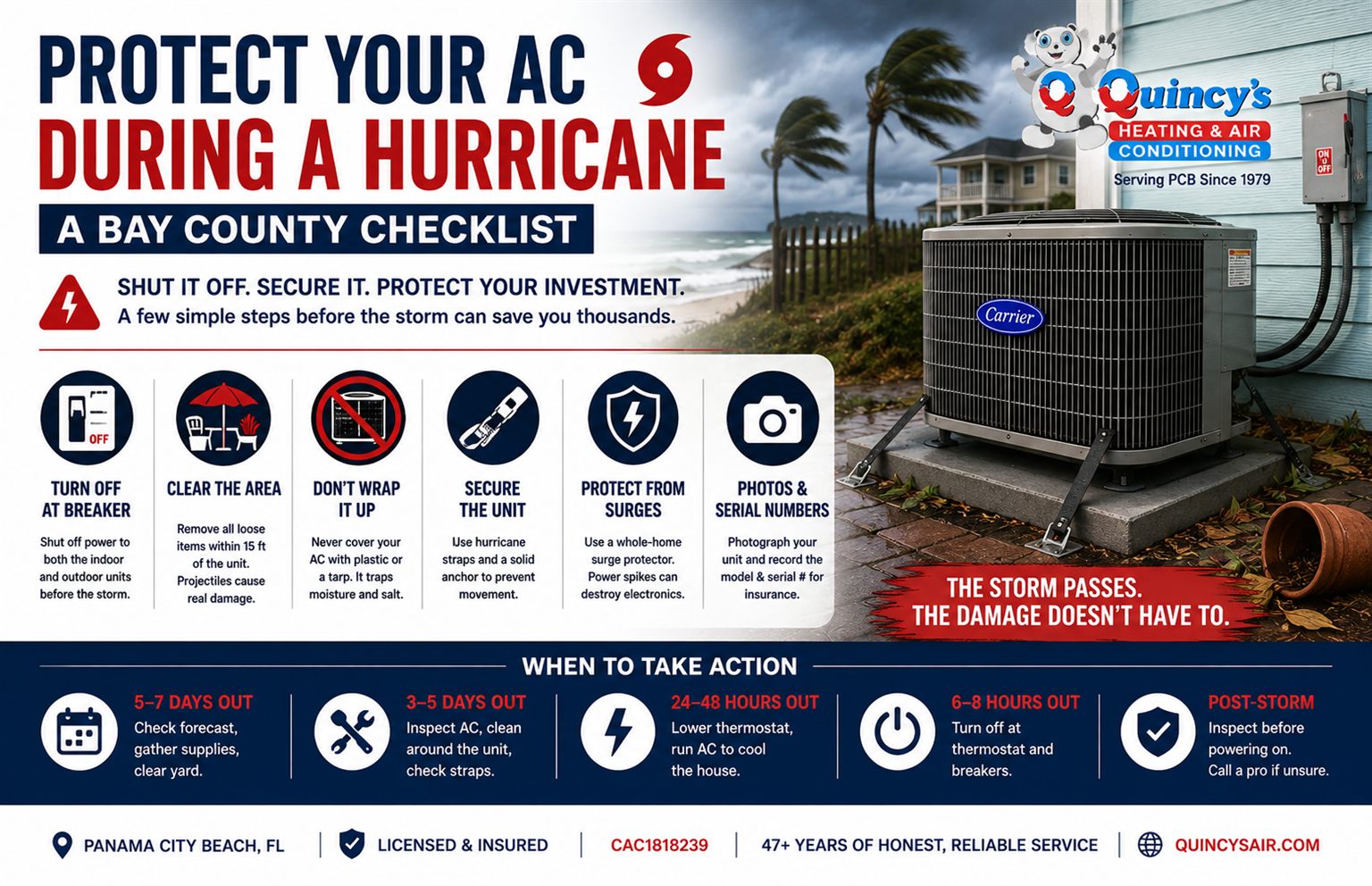
Here is the single most useful thing on this page. Shut your system off at the breaker before the storm arrives, and at the outdoor disconnect too. Wind gets the attention, but the voltage spike when the utility restores power to your neighborhood damages far more air conditioners than flying debris does. Power comes back at two in the morning, the surge rolls through, and the capacitor, contactor or control board takes the hit. A system that is switched off at the panel simply is not there to be hit. It costs you nothing and takes about a minute.

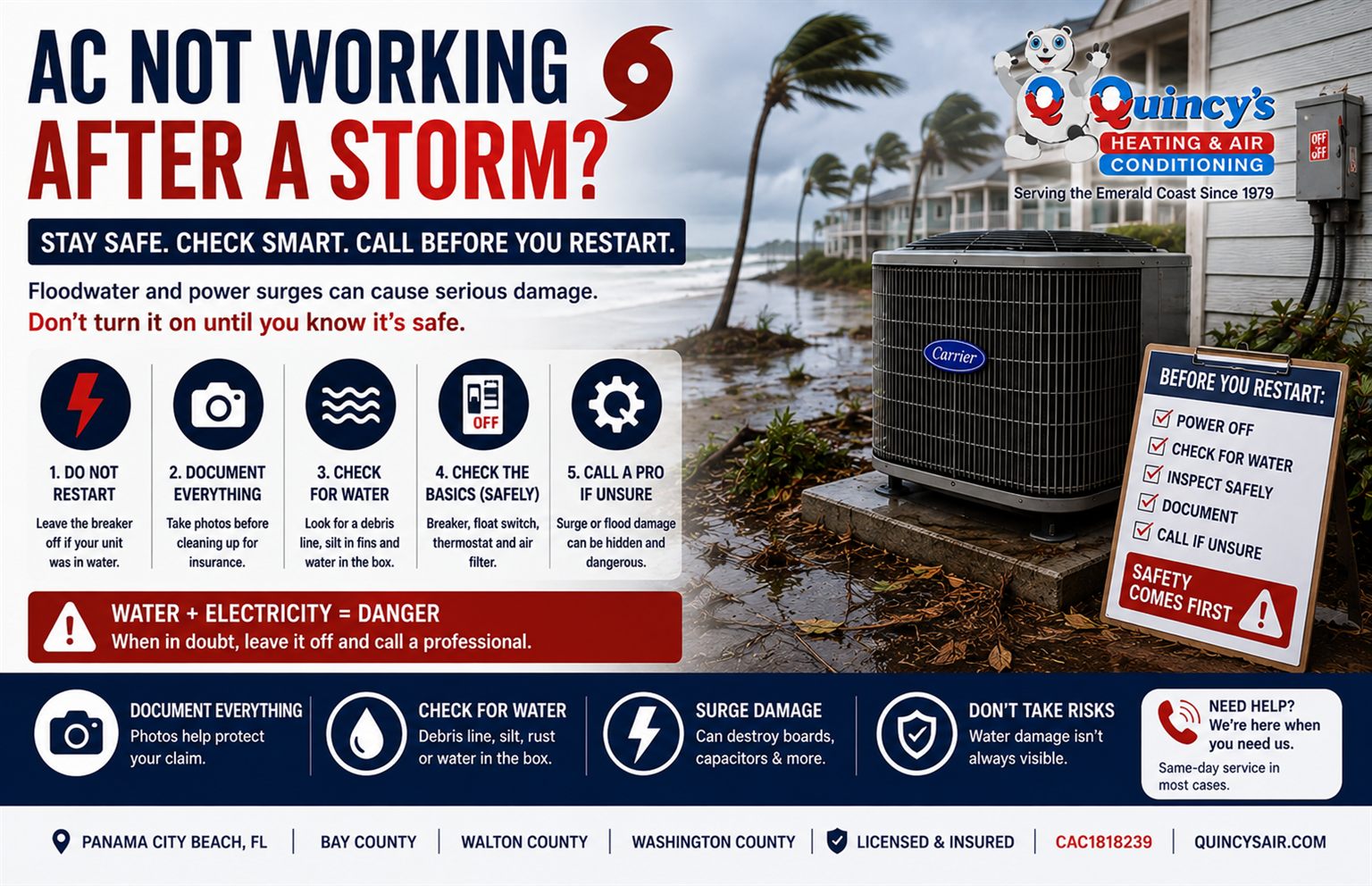
The second thing matters even more, because it is a safety issue rather than a repair bill. Never restart a unit that has been under water. Not to see if it works, not for a few seconds, not after it looks dry on the outside. Water sits in the compressor windings, the wiring and the control board long after the yard has drained, and energizing it can arc or start a fire. Leave the breaker off, photograph the unit before you clear a single branch, and let a licensed tech look at it first. An adjuster cannot value damage you already cleaned up.

Everything else is smaller. Clear loose yard items within about 15 feet of the condenser, since patio furniture and planters are the real projectiles. Skip the plastic wrap, which traps salt and moisture and stops nothing. Write down your model and serial number while you still have good light and dry hands. The three guides below walk through the before, the after, and the cover question we get asked every year.

Home/Blog/Storm Prep
⚑

Storm came through and the AC will not start?

Post-storm AC service across Panama City Beach, Bay County, South Walton and Washington County.

πŸ“ž Call (850) 235-8834

Frequently asked questions

Should I turn my AC off at the breaker before a hurricane?

Yes. Shut the system down at the breaker and at the outdoor disconnect before the storm arrives, not after it passes. Most storm related AC damage on the Emerald Coast is not wind damage. It is the voltage spike that hits the neighborhood when the utility restores power, and a unit that is switched off cannot take that hit. See the full pre-storm checklist.

Can I restart my AC after it has been under water?

No. Never energize a unit that has been submerged, not even for a minute to test it. Water sitting in the compressor, the wiring and the control board can arc or start a fire the moment power reaches it. Leave the breaker off, photograph the unit before you clean anything up, and have a licensed tech assess it first. Our post-storm safety guide walks through it.

Should I cover my AC unit for hurricane season?

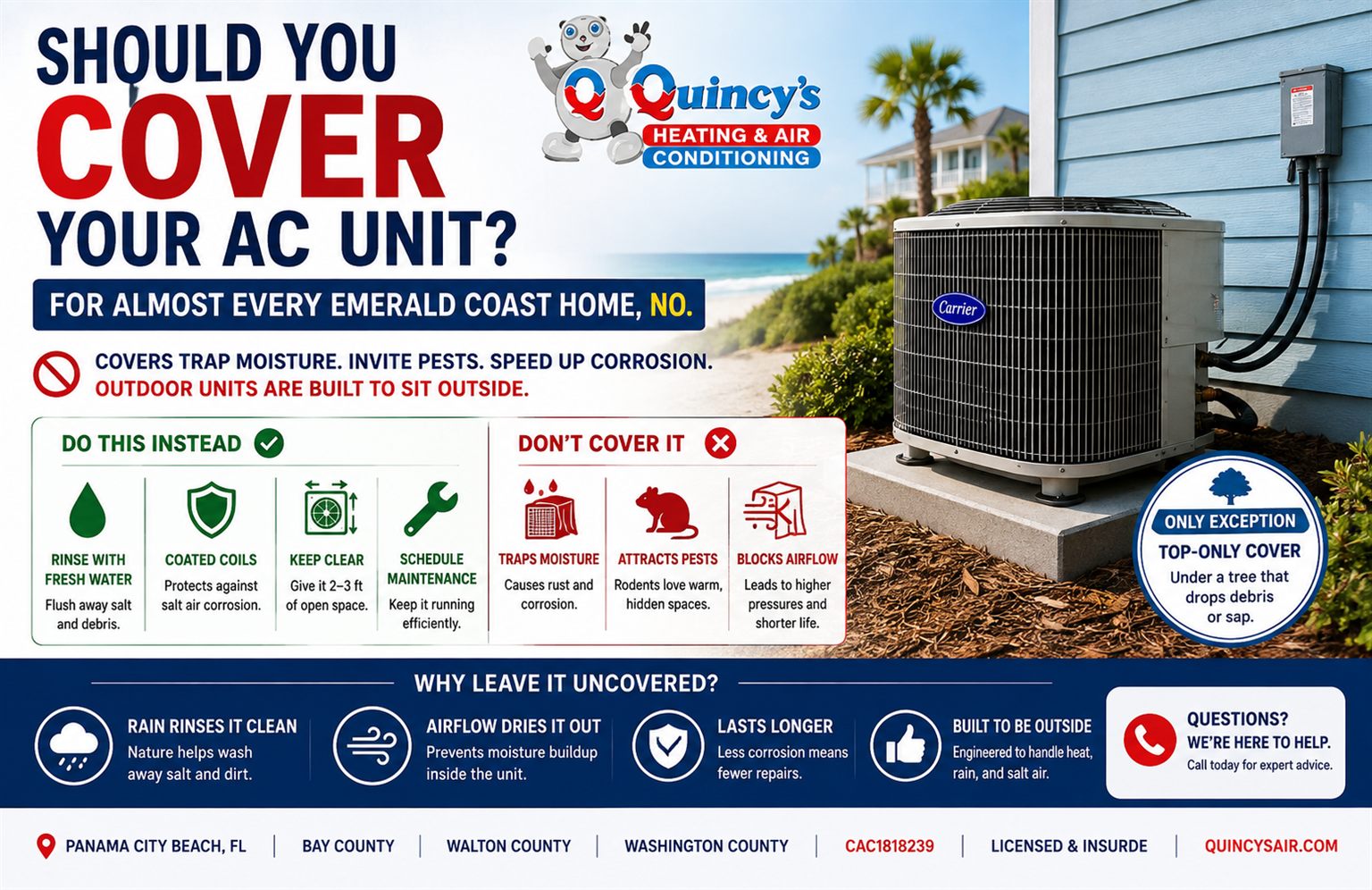
Not with a full wrap. A sealed cover traps humidity and salt against bare metal for months and gives rodents a dry place to nest and chew wiring. Outdoor units are built to sit outside in weather. Your time is better spent clearing loose yard items within about 15 feet of the condenser, since those are the real projectiles. Here is why covers backfire on the coast.

When should I call about storm damage instead of waiting it out?

Call once the power is stable and you have your photographs. Call right away if the unit took any water, if the disconnect box or wiring looks scorched, or if the system trips the breaker when you switch it back on. Quincy's covers Bay County, South Walton County and Washington County. See our AC repair service or contact us.

Storm season is long. Get ahead of it.

A system that is checked before June holds up better through November. Our maintenance plan catches the weak capacitor and the corroded contactor before a storm finds them.

πŸ“ž CallGet a Quote