
Putting a Mini-Split in a Panama City Beach Condo: What the HOA Will Ask and How the Install Goes
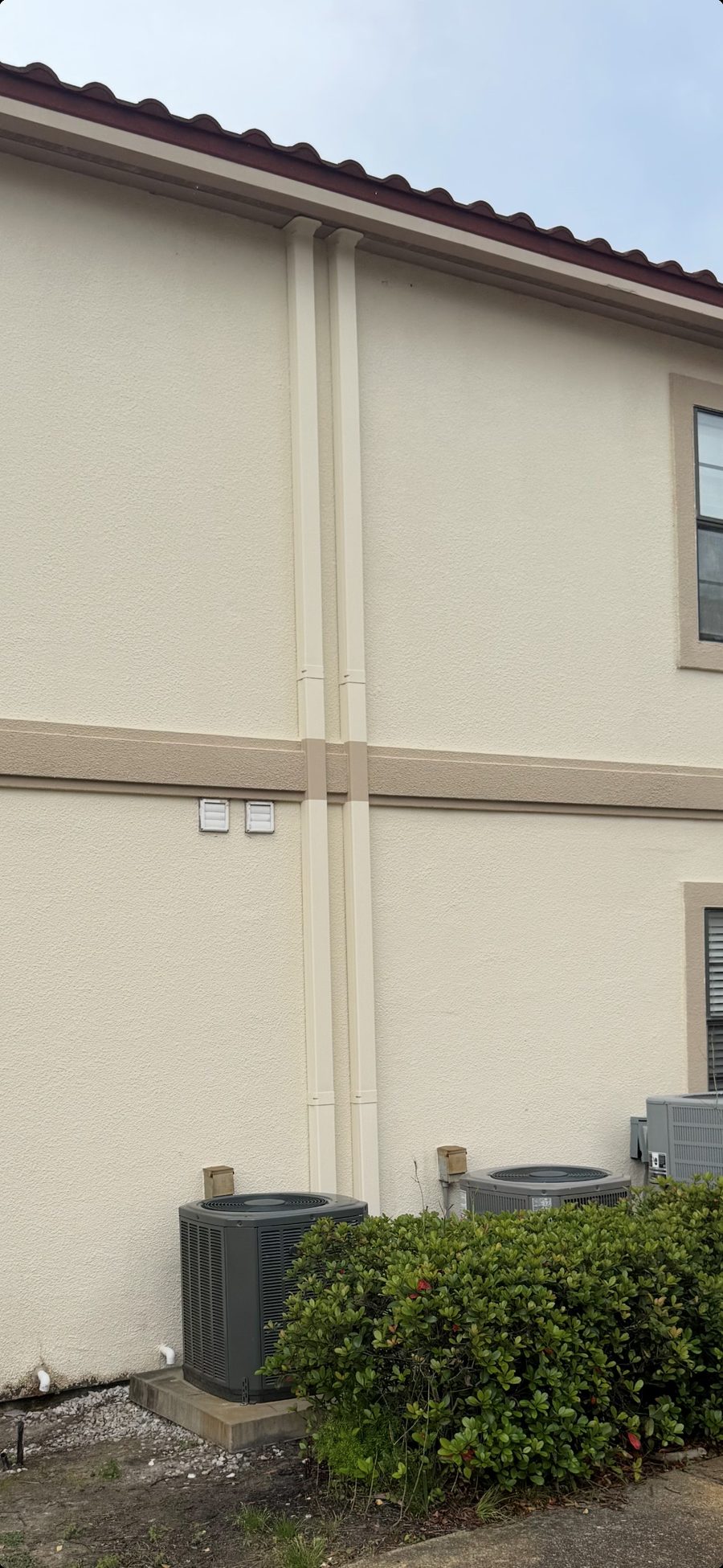
A ductless mini-split is usually the only way to add cooling to a Panama City Beach condo, because the building’s shared ductwork is not yours to change. It needs three things the association has rules about: a place for the outdoor unit, one small hole through the exterior wall, and a line set run on the outside of the building. Knowing what the HOA will accept is half the job, and we ask before we quote.
Most of the Beach lives vertically, and a lot of it is rented by the week. That changes the mini-split conversation compared with a house in Panama City: the building comes first, the salt air is a daily fact, and per-room control is worth real money to a rental owner. Here is how the job goes.
- Ask the association first. Outdoor unit placement, the wall penetration and the exterior line set are all typically governed.
- Balcony or designated pad are the usual outdoor unit locations; some buildings allow neither.
- Size for the glass. Gulf-facing sliders are the load, not the floor area.
- Specify coastal coil protection. Unprotected outdoor units can lose half their expected life to salt.
- Rentals use them for per-room control: bunk rooms, guest suites and owner lockouts.
What the HOA will typically ask
Every building is different, but the questions are consistent. Get the answers before anyone quotes, because they can change what is possible.
| What they govern | What they usually want to know | How we handle it |
|---|---|---|
| Outdoor unit location | Balcony? A designated ground pad? Roof? Nothing visible from the beach side? | We survey the options and put the unit where the building allows |
| The wall penetration | One hole, about three inches, through an exterior wall; sometimes only through a balcony wall | Sealed and flashed to the building standard |
| The exterior line set | Covered, painted to match, routed where the building specifies | Line set covers, finished cleanly |
| Condensate drain | Cannot drip onto the balcony below | Routed to a drain or a condensate pump |
| Noise | Outdoor unit sound level near neighbors | Modern inverter units are quiet; we can provide the spec sheet |
| Licensed contractor and permit | Proof of Florida license and insurance | CAC1818239, insured, permitted where required |
Some buildings will not permit an outdoor unit anywhere a head could reach. When that is the answer, we say so rather than quote something the association will make you remove.
Where the outdoor unit goes
The balcony is the most common answer, on a pad or a wall bracket, with the line set running a few feet to the head inside. A designated ground pad works for lower floors. Rooftop placement is possible on some buildings and involves a much longer line set, which affects both the price and the capacity of the system.
Placement matters for salt. An unprotected outdoor unit facing the Gulf can lose half its expected life to corrosion. We site it out of direct spray where the building allows, specify coastal-rated coil protection where it is available, and tell you how to rinse it. It is the same conversation we have about every outdoor unit on this coast. Why beachfront AC units fail faster has the corrosion detail.
Condo or rental that needs cooling in one room?
Tell us the building and the room. We will tell you what the association is likely to ask and what fits.
Sizing for a Beach condo
The floor area of a condo living room is almost irrelevant. The load is the glass: Gulf-facing sliders that take direct sun through the afternoon. A living room with a wall of west-facing glass needs more capacity than a bedroom twice its size on the north side. We size for the exposure and the glass, not a square-footage chart.
Oversizing is the mistake to avoid. An oversized head cools the room in minutes, shuts off, and leaves it cold and clammy at Beach humidity. A correctly sized inverter head runs long and slow and pulls the moisture out. For a sunroom or lanai enclosure, a ceiling cassette often suits better than a wall head because it keeps the glass walls clear and spreads air across the room.
Why vacation rentals use mini-splits
Per-room control. A bunk room or guest suite on its own head runs only when it is occupied, at whatever the guest sets, without the main system fighting it. That is the difference between a 3am "too hot" message and a quiet week. An owner’s closet or lockout with its own small head stays conditioned between bookings so linens, electronics and supplies are not sitting in summer humidity.
Rental owners also inherit mini-splits with the property. We service wall heads, cassettes and multi-zone systems whoever installed them, and rental turnovers are exactly when they need it. The vacation rental AC guide covers the maintenance rhythm.
Want the HOA conversation handled before the quote?
We have had it enough times to know what to ask. Panama City Beach, from the west end to Thomas Drive.
📞 Call (850) 235-8834What the install involves
- Site visit. The room, the glass, the exposure, where the outdoor unit can go, the electrical, and what the association has said.
- Written quote for the head type and capacity we recommend, with the coastal protection specified.
- Install day. Outdoor unit on the balcony pad or bracket, one sealed hole, head mounted, drain routed so it cannot drip below, line set covered on the exterior, circuit run to a disconnect.
- Evacuation, charge and commissioning before we leave. The step a rushed install skips, and the reason cheap mini-splits fail early.
Prices depend on the head type, capacity, line set length, electrical work and what the building allows. Typical Bay County market ranges run about $4,000 to $7,000 installed for a single-zone head; those are area ranges, not a quote. Ductless mini-split installation in Panama City Beach covers the service in full, and the Panama City version covers houses inland.
Panama City questions we hear about this
Can I install a mini-split in a Panama City Beach condo?
Usually, and it is often the only way to add cooling, because the building’s shared ducts cannot be changed. The outdoor unit needs a permitted location, typically the balcony or a designated pad, plus one small wall penetration and an exterior line set. Most associations have rules about all three, so the HOA conversation comes first.
What will the HOA ask about a mini-split?
Where the outdoor unit will sit, whether it is visible from the beach side, how the wall penetration is sealed, how the exterior line set is routed and finished, where the condensate drains so it cannot drip on the balcony below, noise near neighbors, and proof the contractor is licensed and insured. We gather the answers before quoting.
Where does the outdoor unit go on a condo?
On the balcony, on a pad or a wall bracket, is the most common answer. Lower floors can sometimes use a designated ground pad. Some buildings allow rooftop placement with a long line set. We site it out of direct salt spray where the building allows and specify coastal-rated coil protection.
Will salt air ruin a mini-split on the Beach?
It shortens the life of any outdoor unit here; unprotected equipment can lose half its expected life to corrosion. Coastal-rated coil protection, sensible placement and regular rinsing are the difference between a system that lasts and one that does not. It is the same care every outdoor unit on this coast needs.
Why do vacation rentals use mini-splits?
Per-room control. A bunk room or guest suite on its own head runs only when occupied at whatever the guest sets, without the main system fighting it. An owner’s lockout on its own small head stays conditioned between bookings so linens and electronics are not sitting in summer humidity.
How much does a condo mini-split cost in Panama City Beach?
Typical Bay County market ranges are about $4,000 to $7,000 installed for a single-zone head; that is an area range, not a quote. What moves it in a condo is the outdoor unit location, the line set length, the electrical work and what the building requires for finish and permits. We price it in writing after the site visit.