
A Mini-Split for Your Garage or Florida Room in Panama City: Sizing, Cost Factors and What to Expect
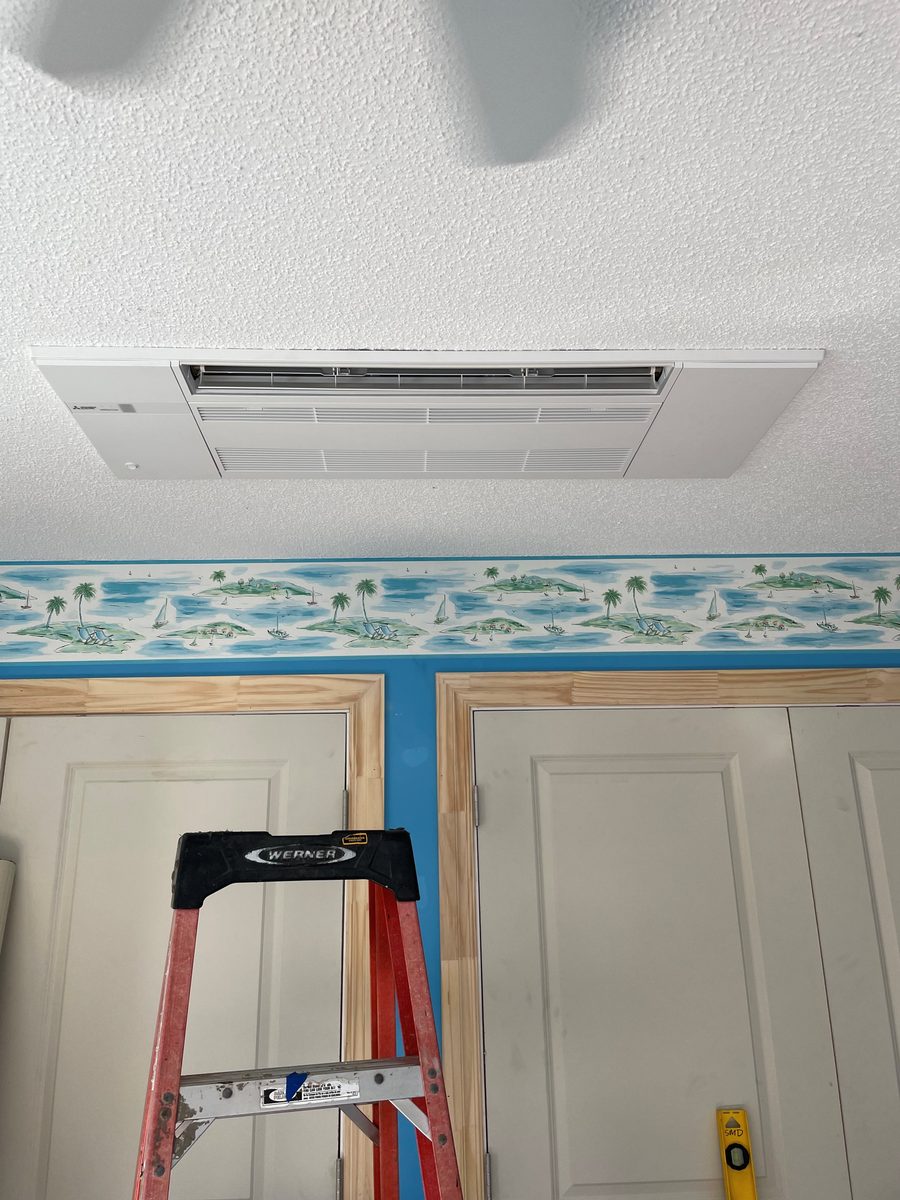
A ductless mini-split is the right fix for a room your central system was never sized to reach: a garage, a Florida room, a room addition, a bonus room over the carport. One compact outdoor unit, one indoor head, and a line set through a hole the size of a coffee cup. No ductwork, its own thermostat, and because nearly all of them are heat pumps, it heats the room on a January morning too.
Panama City houses have grown. A lot of 32401 and 32405 housing has been added onto over the decades, and the original system was never sized for any of it. This article is the practical version: which rooms suit a mini-split, how we size one for a Bay County garage or a glass-heavy sunroom, what drives the price, and what install day actually involves.
- Best for one problem space: garage, addition, Florida room, bonus room, in-law suite.
- Size for the room as it is: an uninsulated garage with a metal door needs more than its square footage suggests.
- Area ranges, not a quote: single-zone installs commonly run $4,000 to $7,000 in this market; two or three zones $8,000 to $16,000.
- It heats too. Panama City sees real cold snaps, and the same head handles them.
- Clean the filters every 2 to 4 weeks in summer or the head will grow mold.
Which Panama City rooms suit a mini-split
| Room | Why the central system struggles | What we usually fit |
|---|---|---|
| Garage or workshop | No ducts, and garage air should stay out of the house | Single-zone wall head, sized for insulation and door |
| Room addition or bump-out | Original system never sized for the extra load | Single-zone wall head |
| Florida room or sunroom | Solar gain through glass a shared zone cannot match | Ceiling cassette, sized for the glass |
| Bonus room over the garage | Hot, hard to duct, controlled from another floor | Wall head on its own thermostat |
| In-law suite or guest room | Needs its own control, runs only when occupied | Single-zone wall head |
| Whole house, no ducts at all | Building ducts from nothing costs more | Multi-zone, one head per main room |
What does not suit one: a hot bedroom on a house with usable ducts. That is usually a crushed or disconnected duct run, and a duct repair is the honest fix. We check before we quote equipment. Ductwork in Panama City.
How we size a mini-split for a Bay County garage or sunroom
Mini-split heads come in capacities from about 9,000 to 24,000 BTU per hour. The wrong size is the most common mistake we see on systems other people installed, and it goes both ways.
Garages. A garage in Panama City is not a 400-square-foot room. It is a 400-square-foot room with an uninsulated slab, a metal door that faces west, no ceiling insulation and 91°F July afternoons on the other side of the wall. We size for the garage as it is: insulation or none, door sealed or not, exposure, and what you do in it. A workshop with a compressor and a welder is a different load from a home gym.
Florida rooms. The floor area is almost irrelevant. Glass on three sides facing the afternoon sun is a solar load a shared zone cannot match, and it peaks at 2pm when the rest of the house is fine. We size for the glass and the exposure, and a ceiling cassette often suits the room better than a wall head because it keeps the walls clear and spreads air across the whole space.
Why oversizing is a problem. An oversized head cools the room fast, shuts off, and leaves it cold and clammy. A correctly sized inverter head runs long and slow, which is what pulls moisture out of Panama City air. Bigger is not better here any more than it is with central systems. What size AC do I need explains the principle.
Garage or Florida room you want usable in July?
Tell us which room, roughly how big, and whether it is insulated. We will tell you what it likely needs.
What drives the price
Typical Bay County market ranges run about $4,000 to $7,000 installed for a single-zone wall head covering one room, and roughly $8,000 to $16,000 for a two or three zone system. Those are area ranges, not a Quincy’s quote, and the spread comes from a handful of things.
- Capacity. A 9,000 BTU head for a bedroom costs less than an 18,000 BTU head for a two-car garage.
- Head type. A wall head is the baseline. A ceiling cassette or a concealed head costs more and involves more ceiling work.
- Line set length. The distance from the outdoor unit to the head. A garage head with the outdoor unit right outside the wall is the easy case.
- Electrical. A mini-split needs its own circuit. If the panel is full or on the other side of the house, that is real work.
- Efficiency tier. Modern mini-splits run 18 to 30+ SEER2. The higher tiers cost more and pay back fastest in a room you condition all summer.
We assess the room and put the price in writing before any work starts. Financing is available for qualified customers. Mini-split versus central AC has the head-to-head comparison.
What install day looks like
- The outdoor unit goes on a pad or a stand outside the room, ideally out of the afternoon sun and clear of the dryer vent.
- One hole, about three inches, goes through the exterior wall for the line set, the drain and the control wire.
- The head goes up high on the wall, or flush in the ceiling for a cassette, with the condensate drain routed to daylight or a pump.
- The line set is covered on the exterior wall so it does not look like an afterthought.
- The circuit is run to a disconnect beside the outdoor unit.
- The system is vacuumed, charged to spec and commissioned before we leave. A mini-split that was not properly evacuated fails early, and it is the step a rushed install skips.
A single-zone install is normally a one-day job. Ductless mini-split installation in Panama City covers the service in full.
Want a mini-split sized for the room, not the wall?
We look at the space, the glass and the electrical, then quote in writing. Panama City, 32401 and 32405.
📞 Call (850) 235-8834The maintenance nobody mentions
The blower wheel and coil inside a wall head stay wet all summer in Florida, and dust sticks to that damp surface until mold grows on it. There is no filter cabinet to catch the dust first. Rinse the mesh filters every two to four weeks in summer and have the blower wheel deep cleaned every year or two. Skip it and the head starts to smell, then loses airflow. The outdoor unit wants the same coil rinse as any other outdoor unit in Bay County, less often inland than at the Beach.
We service mini-splits we did not install, and we fold them into the maintenance plan. AC maintenance in Panama City.
Panama City questions we hear about this
Can a mini-split cool a garage in Panama City?
Yes, and it is the most common mini-split job we do here. A single-zone wall head gives the garage its own conditioned air and its own thermostat without sharing air with the house. It has to be sized for the garage as it is: uninsulated slab, metal door, western exposure, and 91°F July afternoons on the other side of the wall.
What size mini-split do I need for a two-car garage?
Often 12,000 to 18,000 BTU, but the square footage is the least important input. Insulation, the door, the exposure and what you do in the garage decide it. An uninsulated west-facing garage used as a workshop needs the top of that range; an insulated one used as a gym needs the bottom. We size on the room, not a chart.
Does a mini-split heat as well as cool?
Almost all of the ones sold today are heat pumps, so the same head heats the room on a January morning. Panama City sees real cold snaps that the Beach does not, and a mini-split heats a garage or addition far more efficiently than a space heater or the electric strips in an old air handler.
How much does a mini-split cost in Panama City?
Typical Bay County market ranges are about $4,000 to $7,000 installed for a single-zone head and $8,000 to $16,000 for two or three zones. Those are area ranges, not a quote. Capacity, head type, line set length, electrical work and efficiency tier drive the spread. We price it in writing after we see the room.
Is a mini-split better than extending my ducts to the addition?
Usually. Extending a trunk means opening ceilings and hoping the existing system has spare capacity, and it usually does not. A head on the addition sidesteps all of it with one small hole and its own control. The exception is a remodel where the ceilings are open anyway and the system has room.
Do mini-splits need much maintenance?
More than people expect. The mesh filters need rinsing every two to four weeks in a Florida summer and the blower wheel needs a deep clean every year or two, because the head stays wet and grows mold otherwise. The outdoor unit needs the same coil rinse as any outdoor unit in Bay County.